The Nigeria Tobacco Control Alliance (NTCA) convened alliance members, civil society actors, and policy advocates from across the country for a two-day capacity building workshop aimed at strengthening national and sub-national tobacco control implementation. Held from July 22 to 23, 2025, the workshop focused on equipping participants with strategic tools to counter policy stagnation and tobacco industry interference.
The event, themed “Strengthening Civil Society and Institutional Capacity to Advance Sustainable Tobacco Control Policies at National and Sub-National Levels,” featured expert-led sessions on tobacco control law, grassroots mobilisation, advocacy communications, and monitoring and evaluation frameworks.
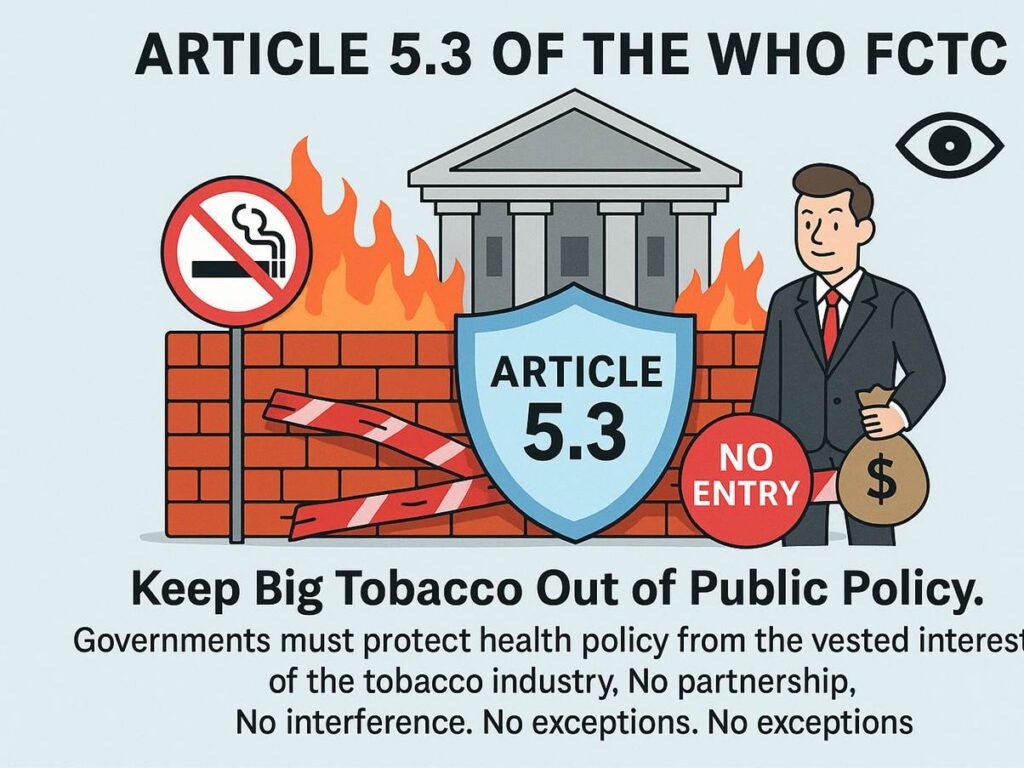
One of the key highlights of the workshop was a presentation by Zikora Ibeh, Assistant Executive Director of Corporate Accountability and Public Participation Africa (CAPPA), who delivered a scathing critique of tobacco industry interference in public health policymaking.
In her session titled “Understanding and Countering Tobacco Industry Interference,” Ibeh outlined the sophisticated ways transnational tobacco corporations infiltrate regulatory processes—ranging from corporate social responsibility schemes to front group lobbying and the manipulation of research data.
“These companies are not passive actors in our policy spaces. They are active saboteurs. They donate hospital beds in the morning and block life-saving tobacco tax policies in the afternoon,” Ibeh said. “They pretend to support youth development while flooding communities with nicotine flavoured products and sponsoring pop concerts outside school zones.”
She cited the National Tobacco Control Act (2015) and its 2019 Regulations as a legal foundation that must be vigilantly defended, warning that the industry’s interference tactics have evolved and now include digital marketing, entertainment sponsorships, and bribery. She referenced the 2017 BBC exposé on British American Tobacco’s bribery operations in East Africa as a glimpse into the same tactics playing out in Nigeria.
Following her presentation, participants engaged in a breakout session to map real-world examples of industry interference in their communities—from covert CSR gifts to pressure on local councils. The exercise underscored the everyday nature of tobacco industry interference and the urgency of civil society coordination.
Other workshop sessions addressed issues such as smoke-free cities, evidence-based advocacy, sub-national implementation challenges, and the role of monitoring and evaluation in campaign tracking. Speakers included NTCA Alliance Coordinator Olawale Makanjuola, Campaign for Tobacco Free Kids (CFTK), In-Country Coordinator Michael Olaniyan, and NTCA Programme Lead Chibuike Nwokorie.
The workshop closed with a forum where participants shared their current work and future goals, reiterating the need for a unified civil society front to hold governments accountable and reject industry influence in all forms.
“There is no neutral ground in this fight,” Ibeh concluded. “The industry is always organising. We must organise louder, smarter, and with no illusions.”