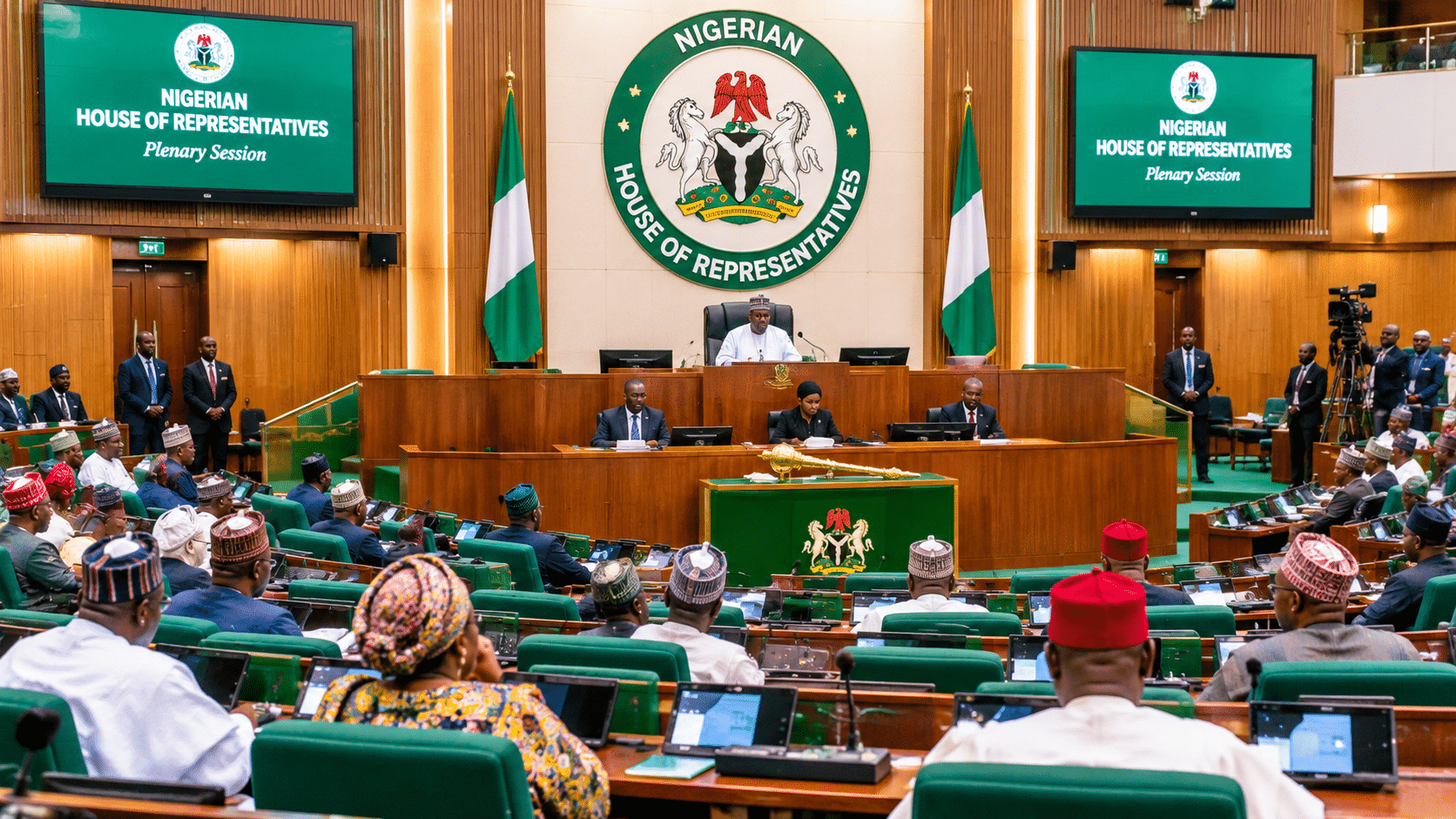
The House of Representatives has been urged to pass the Customs, Excise Tariffs, etc. (Consolidation) Act (CETA) Amendment Bill, popularly known as the Sugar-Sweetened Beverage (SSB) tax Amendment bill.
In a statement, the Corporate Accountability and Public Participation Africa (CAPPA) said the bill is aimed at safeguarding public health and aligning Nigeria’s fiscal framework with ongoing national tax reforms.
It added that following the Senate’s passage of the bill on June 4, 2026, the legislation now awaits concurrence in the Green Chamber before it can be transmitted to the President for assent.
CAPPA emphasised that passing the bill without further delay is essential to correcting a critical flaw in the Finance Act of 2021, which inserted Section 21(3) into CETA and imposed a fixed excise duty of N10-per-litre on non-alcoholic, carbonated, and sweetened beverages.
“When the Finance Act of 2021 came into effect, a 35cl bottle of a sugar-sweetened beverage retailed for about N80.
“Today, that same bottle sells for approximately N500. Because the 2021 law hard-coded a static N10-per-litre figure into the statute, inflation and shifting market realities have eroded the duty to a negligible fraction of the retail price, rendering it completely incapable of discouraging excessive consumption or stimulating product reformulation,” the statement reads
Speaking on the urgency of legislative action, CAPPA’s Executive Director, Akinbode Oluwafemi, said that the 2021 Finance Act inadvertently tied the hands of the government against exercising its fiscal powers effectively with respect to the SSB tax.
“A fixed duty of N10 per litre loses value as prices rise. By replacing it with a responsive, percentage-based levy tied to retail prices, the CETA Amendment Bill restores fiscal flexibility to the Executive and ensures that Nigeria’s health tax actually works as intended,” he said.
He observed that a fixed levy of N10-per-litre amounts to about N3.30 on a standard 33cl (0.33 litre) bottle of a sugar-sweetened beverage, and that because the N10 rate is hard-coded as a fixed monetary value rather than an ad valorem (percentage) levy, inflation and soaring retail prices have diluted the tax to less than 1 percent of the shelf price.
“This dramatic erosion is precisely why manufacturers can easily absorb the cost without changing shelf prices or reformulating their products, rendering the current N10-per-litre excise completely ineffective as a public health tool,” he added.
CAPPA noted that the SSB Tax Amendment Bill is firmly in consonance with the Presidential Fiscal Policy and Tax Reform efforts and enjoys broad institutional consensus across a broad spectrum of government ministries and agencies as demonstrated during the November 27, 2025 Public Hearing conducted by the Senate.
Addressing recent industry pushback, CAPPA clarified critical misconceptions surrounding the bill.
It stated that the SSB Tax is distinct from a general sugar tax. The CETA Amendment Bill specifically targets non-alcoholic, carbonated, and sweetened beverages, which are mostly liquid calories that deliver zero nutritional value and drive rapid spikes in blood glucose, obesity, and Type 2 diabetes.
“In line with World Health Organization (WHO) guidance and the Bloomberg Task Force on Fiscal Policy for Health, an effective retail-price levy, pegged at a benchmark of 50 percent with a minimum floor of 20 percent, protects Nigerian families from preventable chronic diseases while easing the financial burden on an underfunded healthcare system,” he added.
Source: Daily Trust