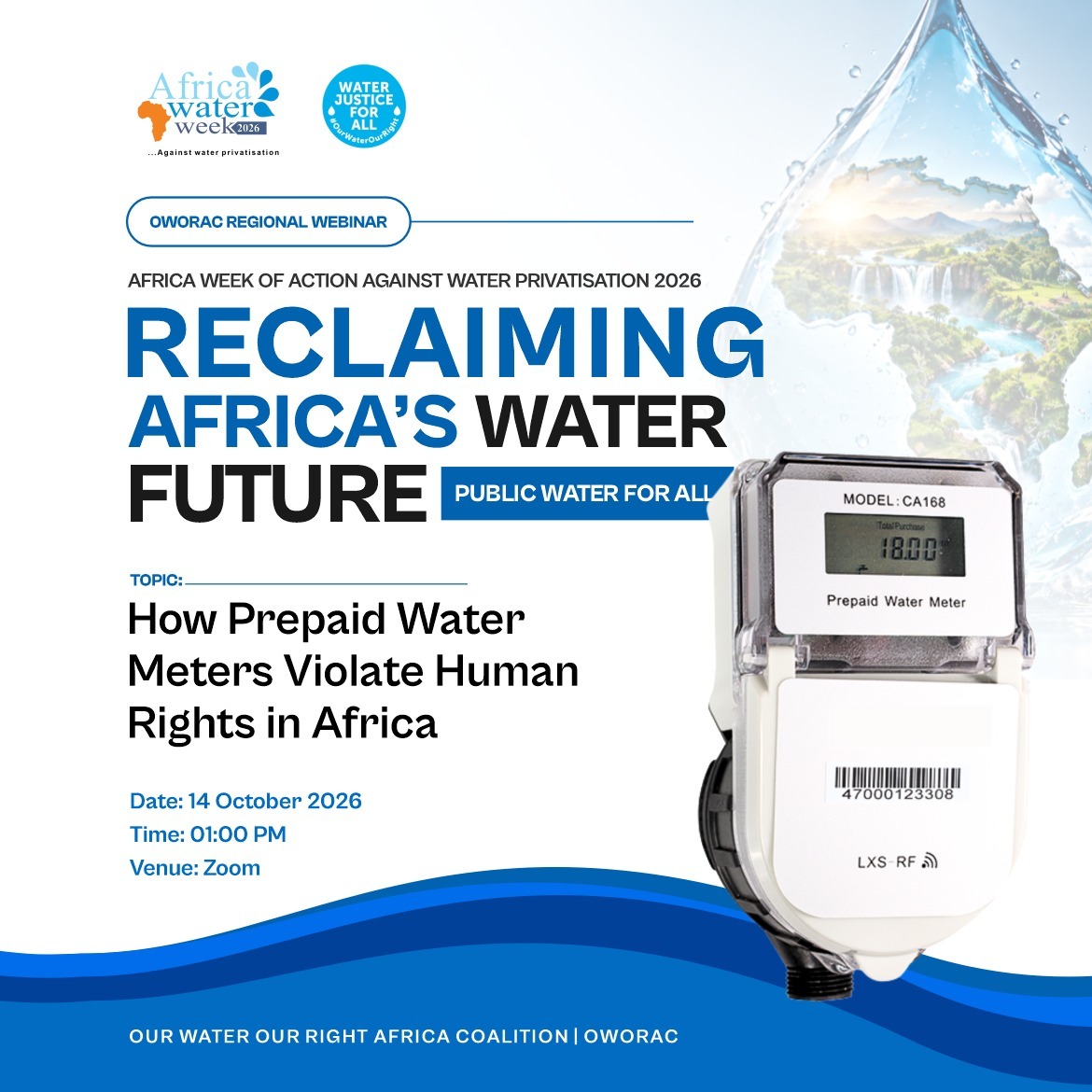
Organised by the Our Water Our Right Africa Coalition (OWORAC) as part of the 2026 Africa Week of Action Against Water Privatisation, the regional webinar on 14 October 2026 brought together water justice advocates and civil society representatives to examine the implications of prepaid and smart water metering, share experiences from their countries and discuss ways to defend water as a human right and a public good.
Speakers from Kenya, Zimbabwe, Nigeria and Ghana described concerns that these systems can make access to water conditional on a household’s ability to pay in advance, while leaving underlying problems—such as inadequate infrastructure, unreliable supply, affordability and weak public accountability—unresolved.
Delivering her opening remarks, Fatou Diouf, General Secretary of the Senegalese Water Justice Network and an OWORAC member, framed the discussion around a basic question: what happens when a household runs out of water credit but still needs water for drinking, cooking, washing and sanitation? She argued that need does not stop when money runs out and warned that prepaid systems risk making access to an essential resource conditional on the ability to pay in advance. She emphasised that the issue is not merely the technology of metering, but the political and economic model governing its use. She called for policies that guarantee water that is affordable, accessible, safe and sufficient for everyone.
The first presentation at the webinar, delivered by Gideon Muya, Programmes and Research Assistant at the Biodiversity and Biosafety Association (BIBA) Kenya, reviewed the spread of prepaid water meters in Kenya. Muya described the growing use of three types of water meters in the country: prepaid meters, which require users to purchase credit before water flows; smart meters, which digitally track consumption and transmit readings remotely; and ultrasonic meters, used particularly by large-scale water users. He noted that users can buy prepaid water credit through mobile money and that the supply stops when the credit runs out, deepening inequalities in access to water. Key concerns raised in his presentation included the following.
- Affordability: reported meter prices ranged from approximately US$70 to US$2,000, in addition to the cost of water. Low-income households struggle to afford both the meter and the water itself.
- Unequal impacts: residents of informal settlements already facing high water costs experience metering as an additional expense. Tenants in apartment buildings are required to pay in advance to landlords.
- Billing and leakage: smart meters may continue recording consumption where leaks occur, potentially leaving users to pay for water they did not knowingly use.
- Data protection: digital meters may collect consumption information and location data. The speaker raised concerns about who can access this information, how it may be shared, and whether users provide informed consent.
- Public participation and transparency: communities may not understand how tariffs and regulatory charges are calculated or have a meaningful role in decisions affecting water prices.
Muya recommended community engagement with policymakers and water-resource authorities, transparent water policy, public participation in water decisions, strong safeguards for water-consumption data, and ensuring that technological innovations serve communities rather than undermine their rights.
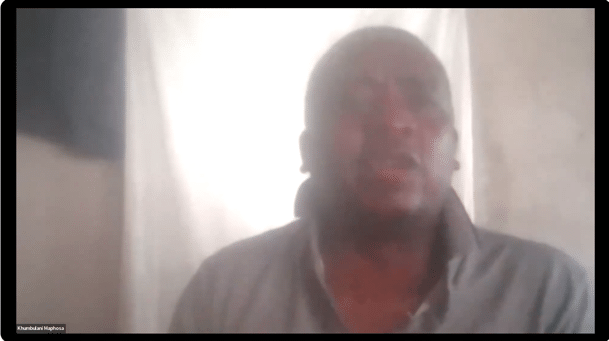
In the second presentation, Khumbulani Maphosa, Lead Coordinator of Voices for Water, placed the current debate over prepaid water meters in the context of Zimbabwe’s history of local authority management of water services and community resistance to privatisation. He recalled that earlier attempts to introduce prepaid meters in Bulawayo had prompted civic campaigns, demonstrations, petitions and engagement with the local authority, after which the proposal was dropped. He described a 2025 ministerial directive on the introduction of prepaid water meters in urban areas, including Harare, Bulawayo and Victoria Falls, and raised concerns about an unsolicited bid and the reported award of a contract to a company associated with a member of Parliament. He argued that these developments raised questions about potential conflicts of interest, the separation of powers and the ability of elected representatives to hold the executive accountable.
Maphosa also discussed plans or developments involving prepaid meters in other areas, including Gwanda and Plumtree, and noted that a previous system had failed in Plumtree. He warned that a wider rollout could undermine local public water initiatives, including a proposed public water utility in Bulawayo. His account underscored the importance of civic mobilisation, transparency in policymaking, public participation and the role of local authorities in providing water services.
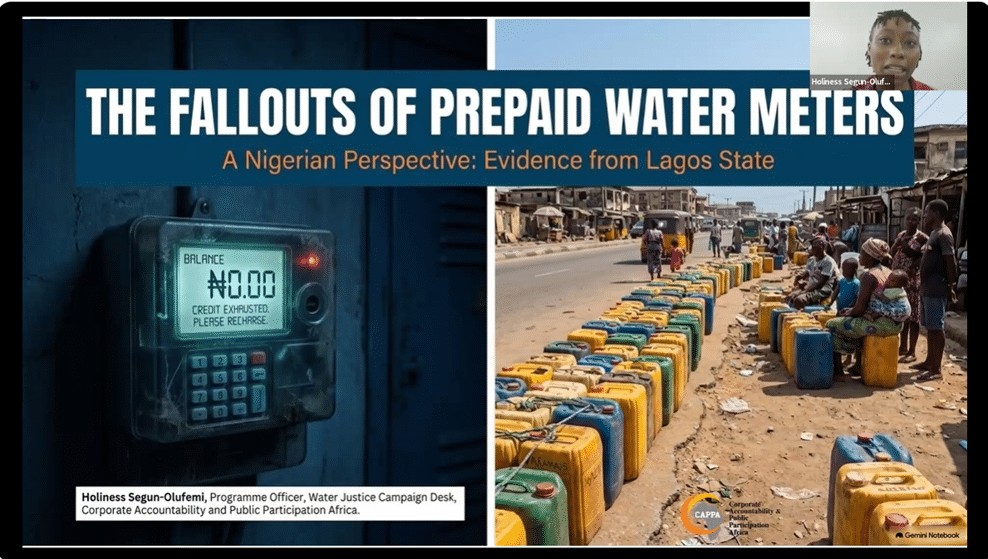
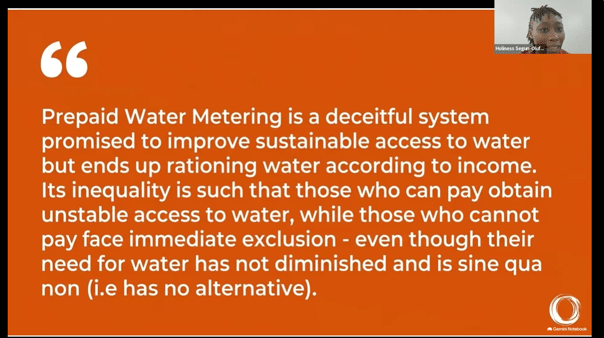
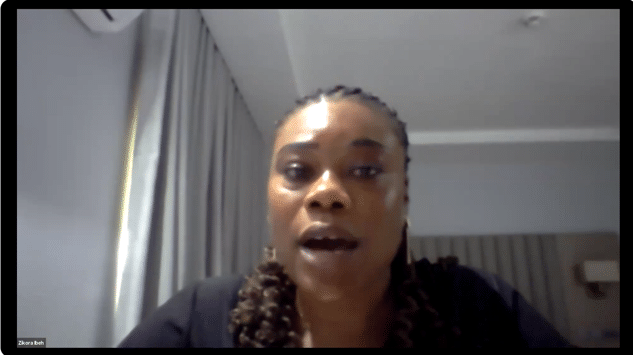
The third presentation, delivered by Holiness Segun-Olufemi, Programmes Officer at Corporate Accountability and Public Participation Africa (CAPPA), drew on CAPPA’s community-level research on prepaid water metering in Akilo and Baruwa, Lagos. The research involved structured interviews with 44 residents, 24 in Akilo and 20 in Baruwa. Segun-Olufemi traced the expansion of prepaid metering over time, including the rollout associated with the rehabilitation of the Akilo Waterworks. Residents reported high and unpredictable costs, intermittent supply and instances in which their prepaid credit appeared to disappear. She also examined the implications for the right to water, household poverty, public health and gender equality. Women and girls, she noted, often bear responsibility for collecting water and may have to spend more time and effort securing it when their households cannot afford the metered supply.
Geoffrey Ocansey of the Water Citizens Network drew on Ghana’s experience with private-sector participation in water services. He recalled that discussions began in the 1990s with limited involvement from civil society organisations and pointed to the five-year management contract with Aqua Vitens Rand, which ran from 2006 to 2011. According to Ocansey, civil society groups, researchers, activists and labour organisations mobilised to challenge the arrangement, arguing that it had failed to deliver the promised improvements and that service remained poor. The contract ended in 2011, and management of urban water services returned to the public utility.
Ocansey stressed that even households with prepaid credit cannot draw water when the supply is interrupted. He argued that water governance is a social contract between citizens and public officials, and that decisions should reflect public priorities, uphold accountability and address the needs of households with little or no income. He highlighted the importance of collective advocacy and evidence-based mobilisation in resisting the commodification of essential services.
- Common Findings Across Countries
- Ability to pay determines access: Prepaid systems can automatically interrupt access when credit runs out, despite the continuing need for drinking water, hygiene and sanitation.
- Metering does not resolve structural failures: Meters do not, by themselves, address inadequate infrastructure, intermittent supply, pollution, unequal distribution or insufficient public investment.
- Costs and risks fall unevenly: Low-income and no-income households, tenants, informal-settlement residents, women, children, older people and persons with disabilities may face disproportionate barriers.
- Transparency and accountability are essential: Unclear tariffs, unexplained deductions, procurement concerns and limited public participation weaken trust and make it harder for communities to seek redress.
- Digitalisation raises data concerns: Smart metering can generate detailed consumption and location data, raising questions about consent, storage, access and sharing.
- Public mobilisation can influence policy: Experiences shared from Nigeria, Kenya, Zimbabwe and Ghana demonstrated the role of sustained civic advocacy, community organising, research and labour solidarity in challenging privatisation initiatives.
- The public-service alternative requires public investment: Speakers called for public-funded public water systems, accountable institutions, a guaranteed water lifeline and decisions shaped by community needs.

The webinar concluded with a call for African governments and water authorities to guarantee everyone a basic supply of safe water, regardless of a household’s immediate ability to pay. Participants called for an end to disconnections from essential water services when prepaid credit runs out. They also recommended scrapping prepaid metering schemes, citing their impact on low-income households, residents of informal settlements, tenants, women and girls, persons with disabilities, and communities that rely on alternative water sources. They urged sustained public investment in water infrastructure, maintenance, treatment and distribution. Participants said information on tariffs, meter costs, billing methods, deductions, contracts and regulatory charges should be clear and publicly accessible. They urged that communities, civil society organisations, workers, and other affected groups have a meaningful say in water policy decisions, and that public officials answer to the people affected by those decisions.