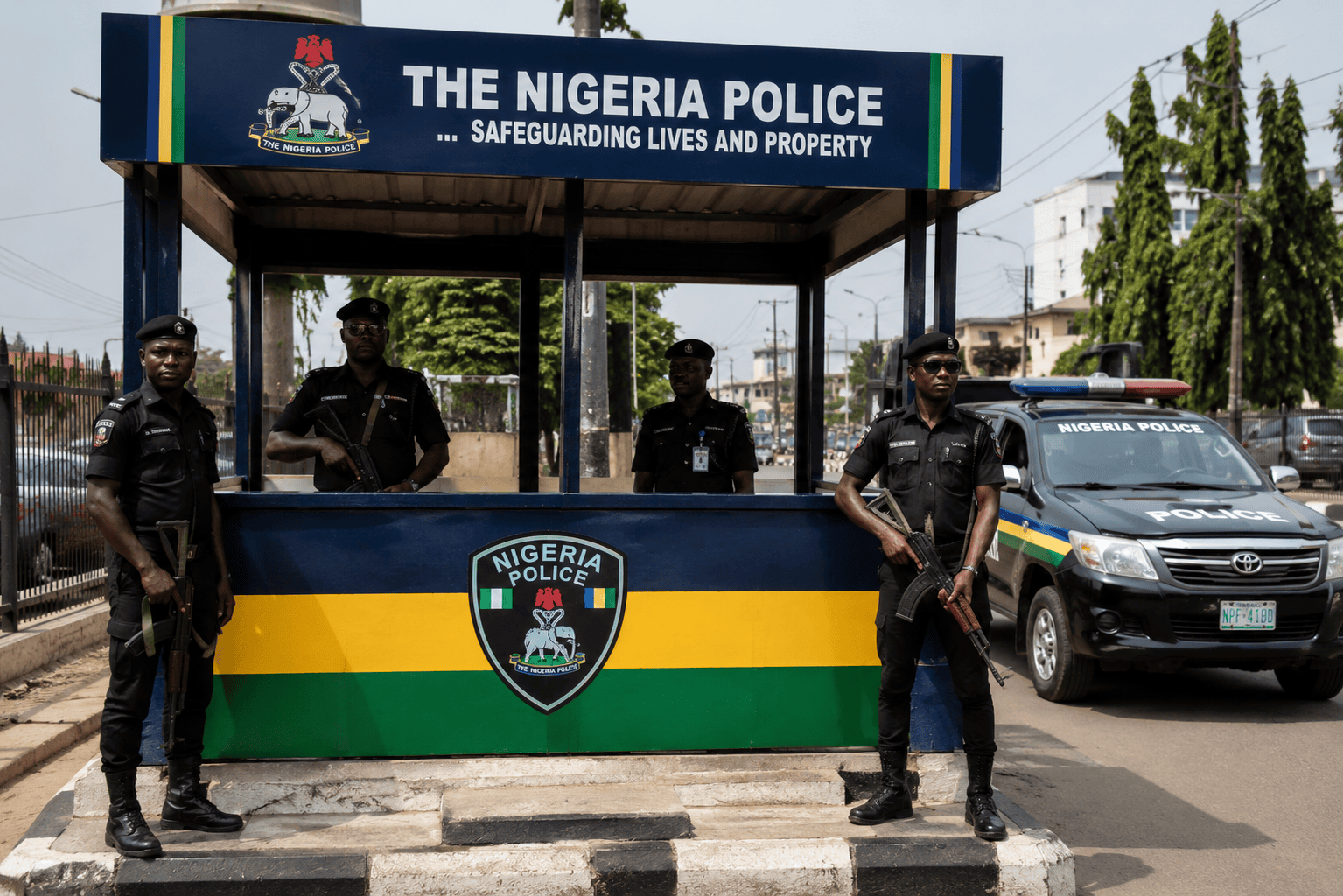
Experts in governance, human rights and public policy have warned that establishing state police will not, by itself, resolve Nigeria’s security crisis. They argued that any reform of the country’s policing system must be anchored in democratic oversight, public accountability, respect for human rights and meaningful citizen participation.
The experts spoke at a webinar attended by 75 participants and organised by Corporate Accountability and Public Participation Africa (CAPPA) on Tuesday, July 28, 2026, as part of its Democracy and Human Rights Campaign.
Titled “Insecurity and State Police in Nigeria: The Way Forward,” the webinar examined the proposed constitutional amendment passed by the National Assembly to permit Nigeria’s 36 states to establish and operate their own police forces alongside the Nigeria Police Force. The proposal, which is supported by President Bola Tinubu’s administration, has emerged amid worsening insecurity and growing demands for policing that responds more effectively to local conditions. It still requires ratification by at least two-thirds of the state Houses of Assembly.
Delivering the first presentation at the meeting, Mr Okechukwu Nwanguma, Executive Director of the Rule of Law and Accountability Advocacy Centre (RULAAC), focused on “State Policing in Nigeria: The Imperative, the Risks and the Architecture for Accountability.”
He examined state policing from the perspectives of security and constitutional governance, arguing that Nigeria’s growing insecurity has made the idea of police reforms an urgent national concern but stressed that any move towards state policing must follow a transparent, consultative, and democratic process. He challenged the assumption that Nigeria’s security crisis is simply the result of its centralised policing system. According to him, corruption, political interference, poor working conditions, weak investigative capacity and persistent human rights abuses are rooted in broader governance failures. Transferring policing powers from the Federal Government to state governments would therefore not automatically produce a more effective or accountable police service.
Drawing on Nigeria’s policing history and experiences from other countries, Nwanguma explained that decentralisation does not necessarily require the establishment of state police. Operational devolution and community policing could also strengthen local security within the existing structure. He warned that without strong democratic institutions and independent oversight, decentralised policing could become an instrument of political repression rather than a public service. State governors and other political actors could exploit state-controlled police forces to intimidate opponents, suppress dissent or influence elections if adequate safeguards are not established.
The second presentation was led by Dr Glory Ukwenga, Executive Director of the Africana League, on “State Policing and Democratic Participation: What Role for Nigeria’s Youth?” Ukwenga emphasised the indispensable role of young people in democratic governance and security-sector reform. She argued that young Nigerians should be active participants in shaping policing policies rather than passive recipients of decisions made without them. While acknowledging that the government bears primary responsibility for protecting citizens, she said young people also have an important role to play through civic engagement, policy participation, innovation and the promotion of democratic values within their communities.
Ukwenga noted that young people constitute more than 70 per cent of Nigeria’s population, yet their participation remains largely absent from discussions about the proposed state policing framework. She called for youth representation on state police service commissions and police-community relations committees, as well as the creation of youth advisory councils on security. She also proposed structured consultations with youth organisations and the inclusion of young people in police oversight and performance evaluation. Other measures recommended included youth-focused recruitment and civic security programmes, public education on security governance and digital platforms through which young people could report security concerns, participate in consultations and provide policy feedback.
Ukwenga encouraged young Nigerians to propose practical solutions to local security challenges and support initiatives that strengthen democratic institutions. She said meaningful youth participation should include monitoring police performance, reporting human rights violations, contributing to evidence-based reforms and assessing the effectiveness of security policies.
The third presentation led by Mr Akinbode Oluwafemi, Executive Director of CAPPA, looked at “Building a People-Centred Security Framework for Nigeria.” Oluwafemi examined police reform from the perspectives of governance and public policy. He argued that Nigeria’s security crisis requires a people-centred response that goes beyond changing the administrative structure of the police.
He observed that many citizens still perceive the police as a repressive institution rather than a public service. He said the debate on state policing must therefore begin with a fundamental question about the kind of policing system Nigeria wants to build. According to him, the country needs a police service that earns public trust, protects human rights and serves communities rather than one that reinforces political control.
Oluwafemi also identified poverty, unemployment, inequality, weak public services and failures within the criminal justice system as major drivers of insecurity. He maintained that these structural problems must be addressed alongside police reform because no policing arrangement can compensate for persistent failures in governance. He advocated a community-focused and preventive policing model in which law-enforcement institutions work with citizens to prevent crime, build trust and strengthen social stability. Such a model, he explained, must treat communities as partners in security governance rather than merely as subjects of police authority.
Across the three presentations, the speakers maintained that Nigeria’s security crisis cannot be resolved by establishing state police alone. Any new policing arrangement must be supported by strong democratic institutions, independent oversight, respect for human rights and active public participation.