Elevated levels of methane, hydrogen sulphide and carbon dioxide have been confirmed in Bille, where gas has been bubbling through creeks, wells, residential compounds and school grounds since late 2025. Government investigations have also confirmed contaminated groundwater and polluted air. Residents still lack sufficient safe water, reliable medical care and a public explanation of the source of the seepage.
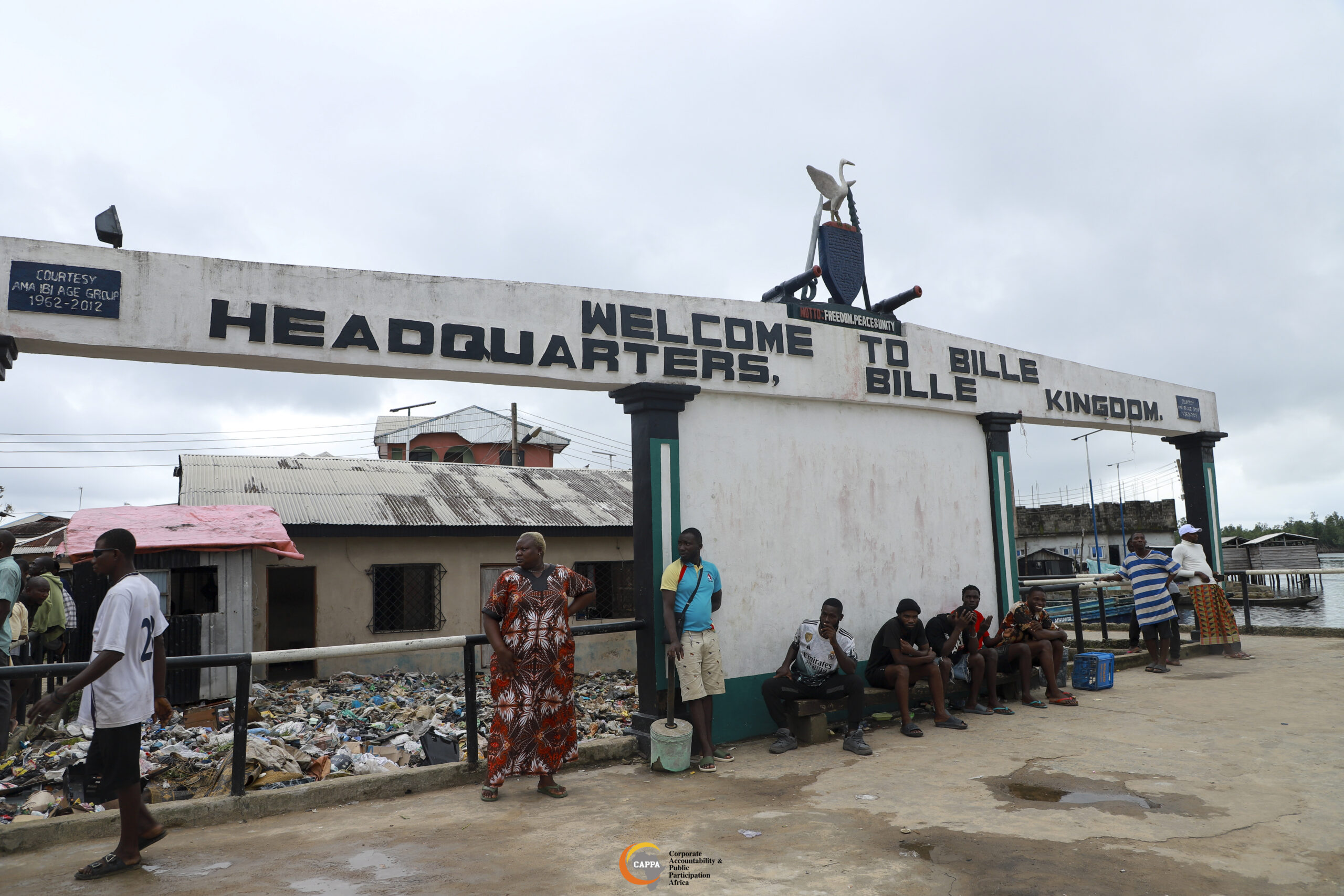
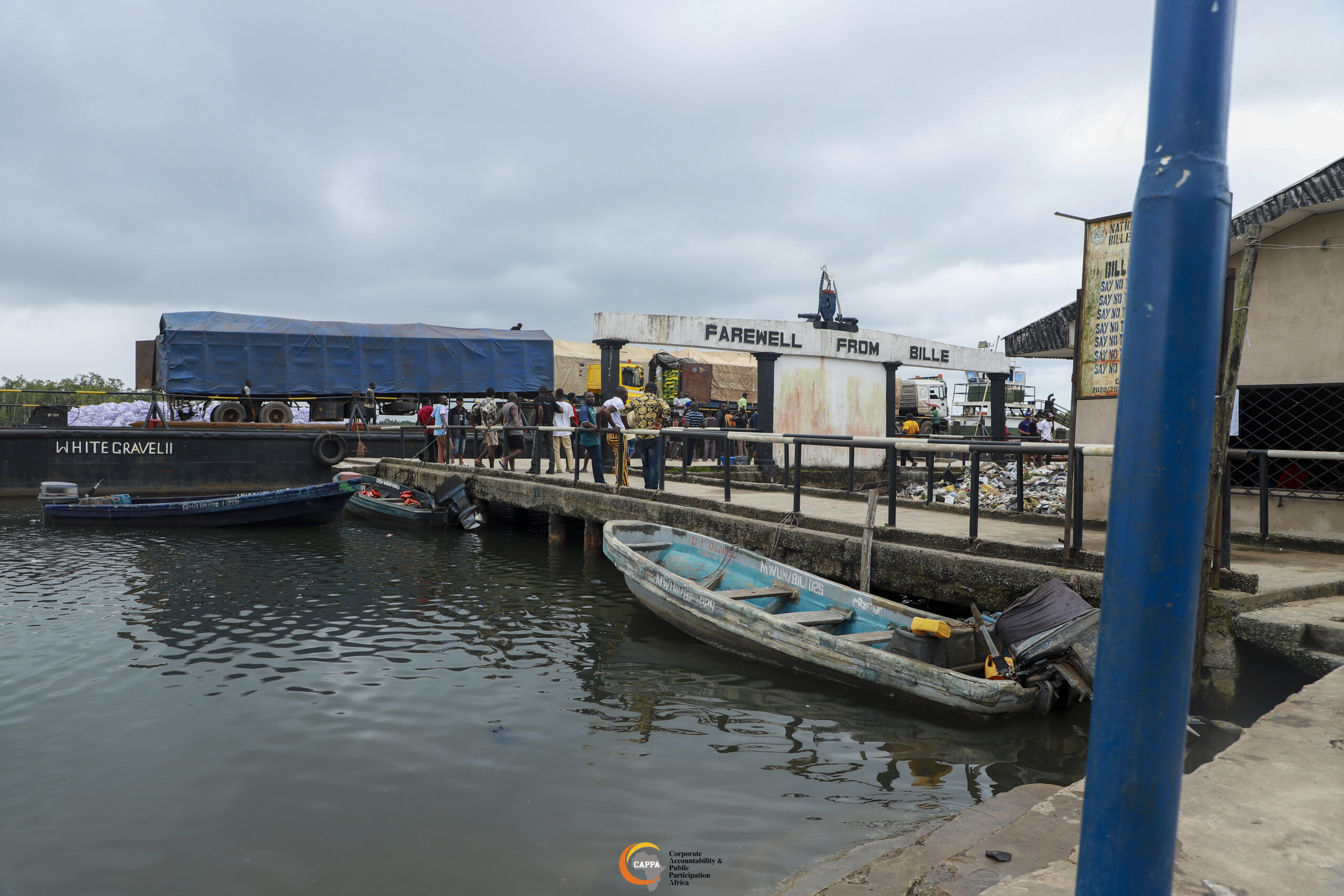
At the approach to Bille Town, the headquarters of Bille Kingdom, a welcome sign stood above the waterfront. Nearby, a vessel lay moored, its deck stacked with bags of sachet water. Workers unloaded the supplies as residents gathered along the shoreline and boats moved through the creeks. In Bille, safe water has become a costly necessity that many families now struggle to afford as gas continues to bubble from multiple locations across the community.
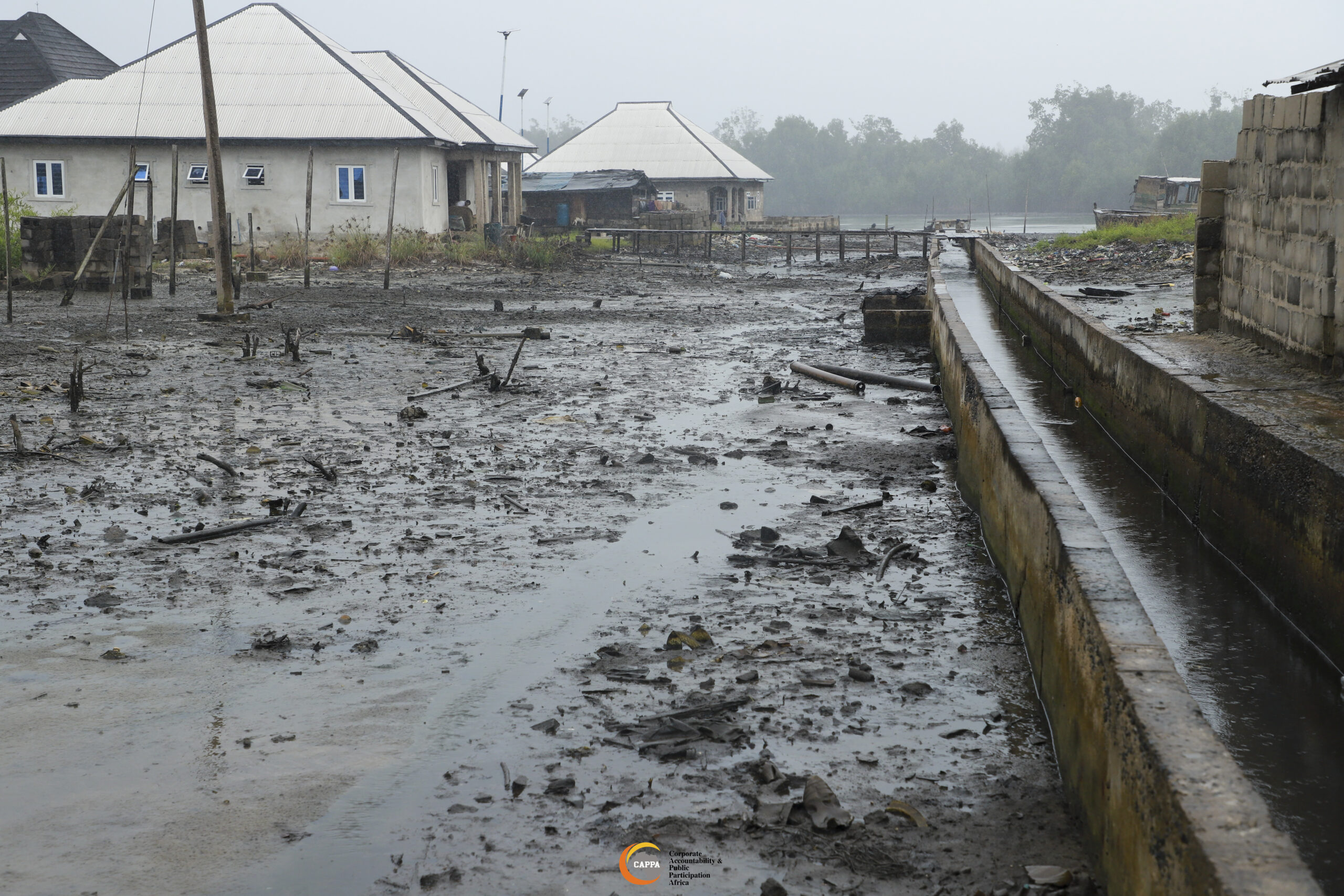
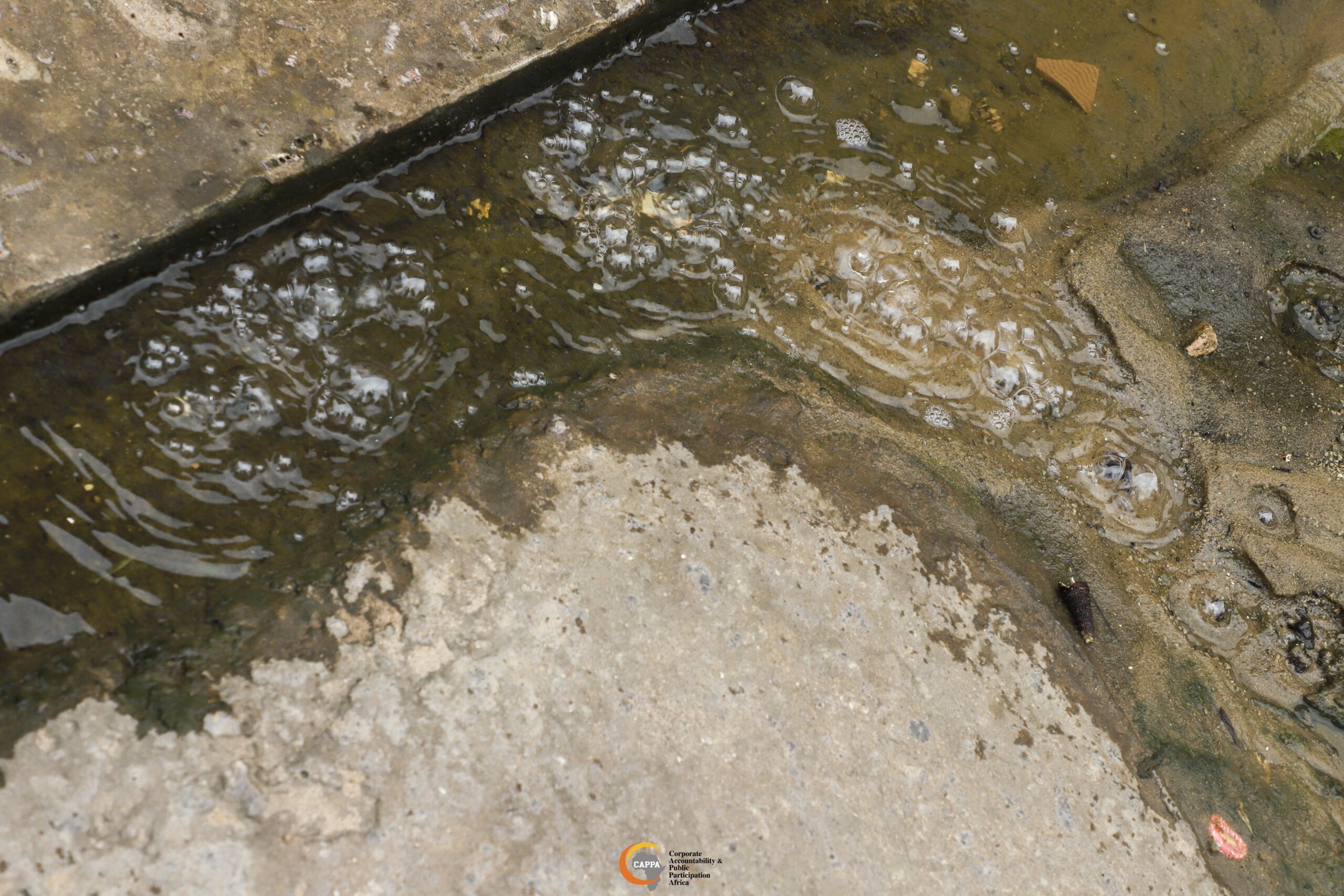
During a field visit on July 6, 2026, a team from the Corporate Accountability and Public Participation Africa (CAPPA) documented gas escaping from wells, residential compounds, mangrove swamps, creeks and the grounds of a local school. Residents said the problem began in October 2025 and has persisted ever since.
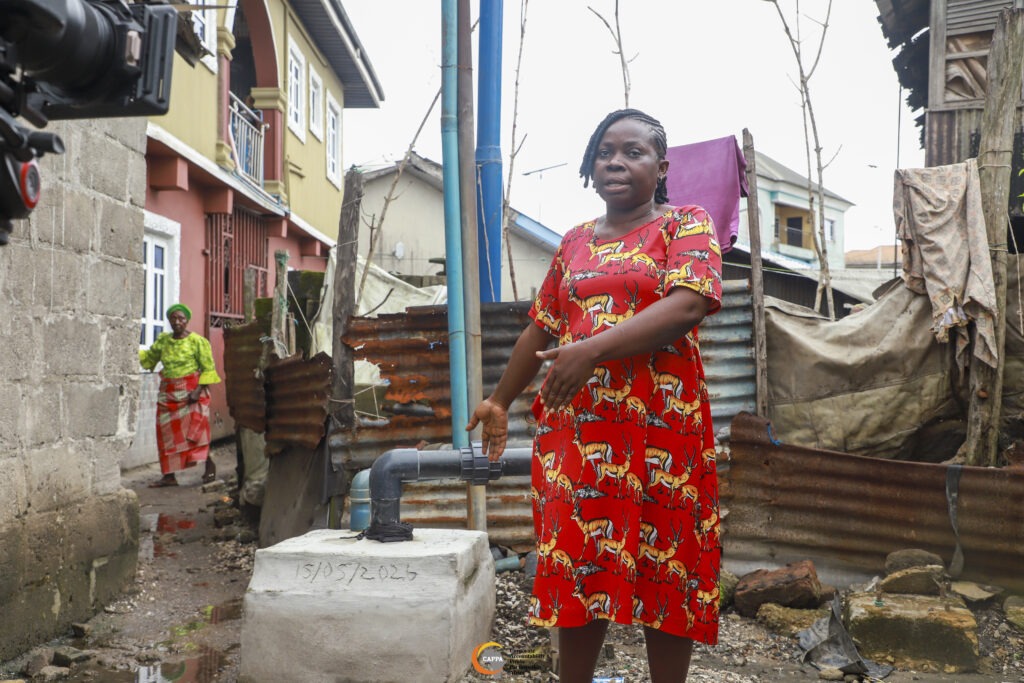
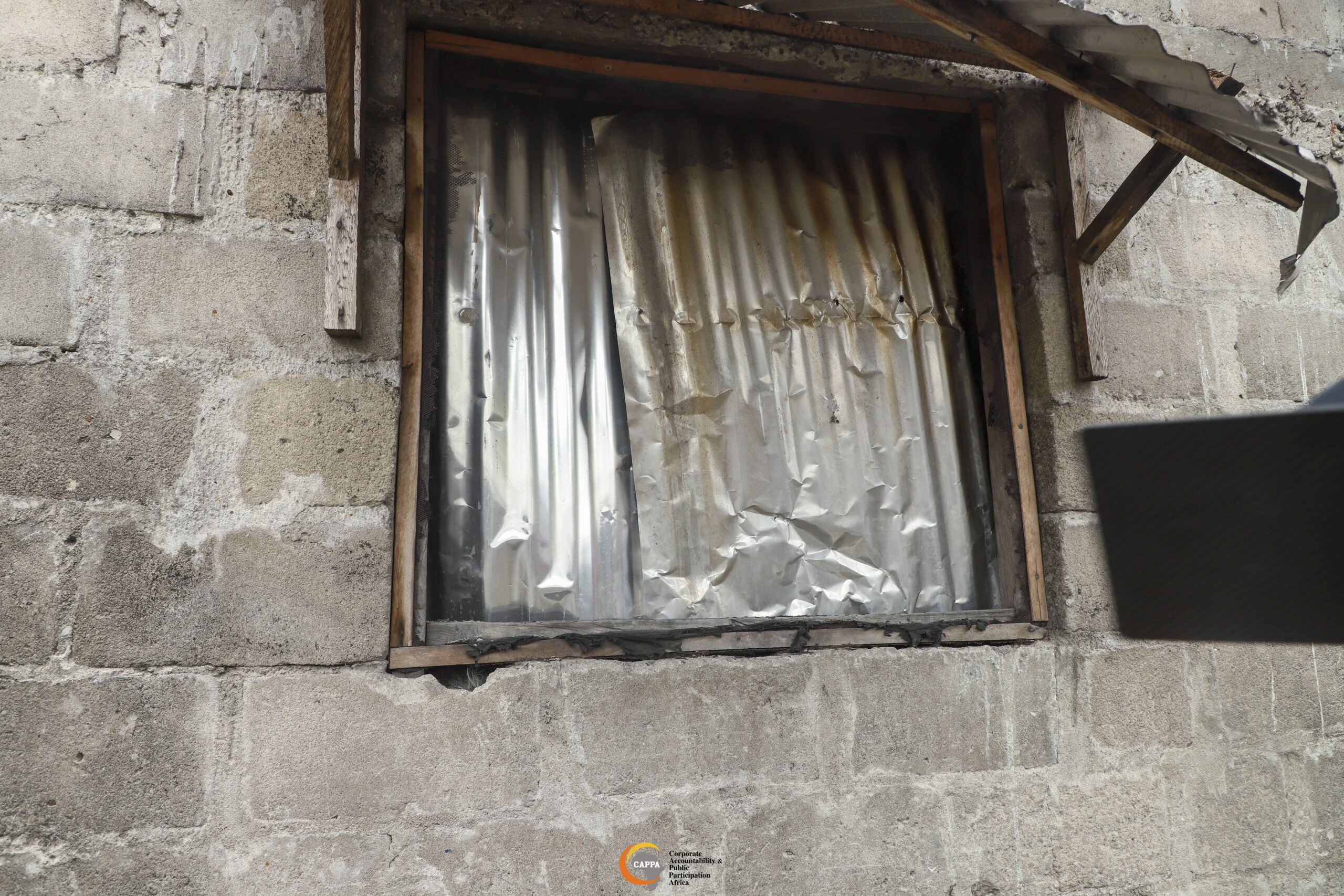
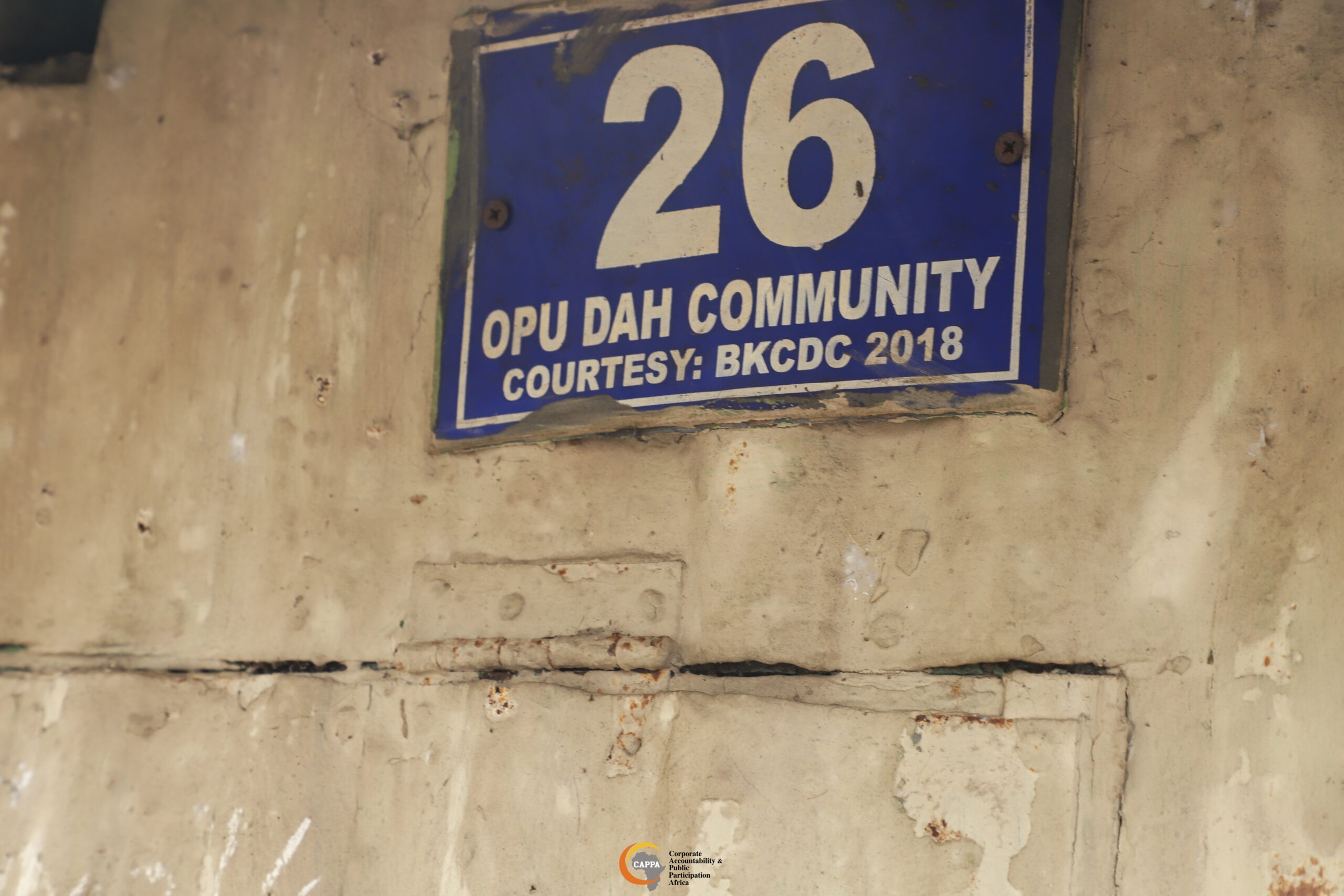
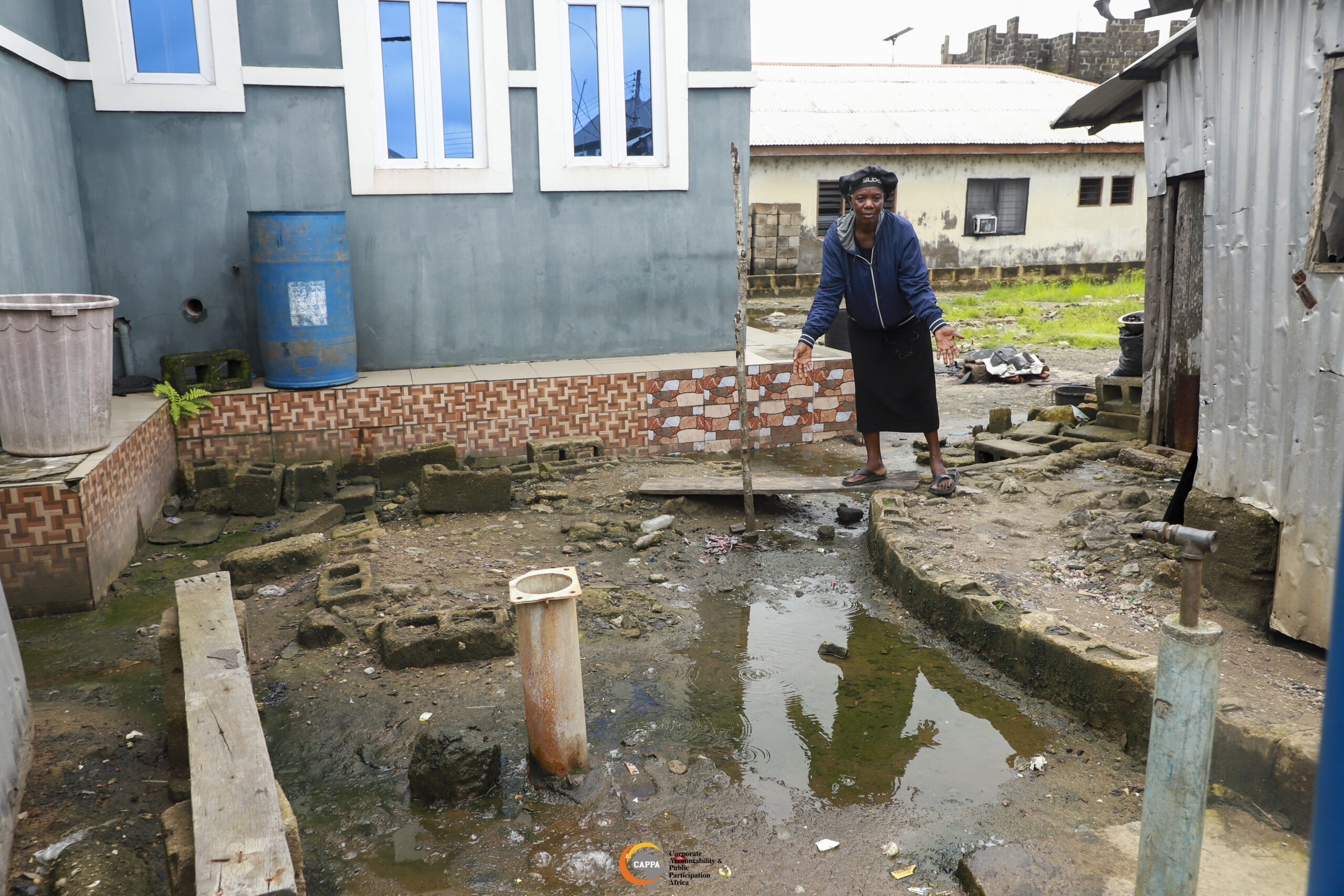
At 26 Opu Dah Compound, a concrete slab now seals a borehole that once supplied water to several families before it began releasing gas. A nearby window still bears scorch marks from a fire that residents said broke out during an attempt to contain the gas.
Choice Dokubo, who lives in the compound, said the borehole began releasing foul-smelling gas and dirty water. Before residents sealed it, the fumes spread into nearby homes and made the air difficult to breathe.
“This place produces gas and dirty water. The emissions make it difficult for people to breathe whenever they pass,” Dokubo said.
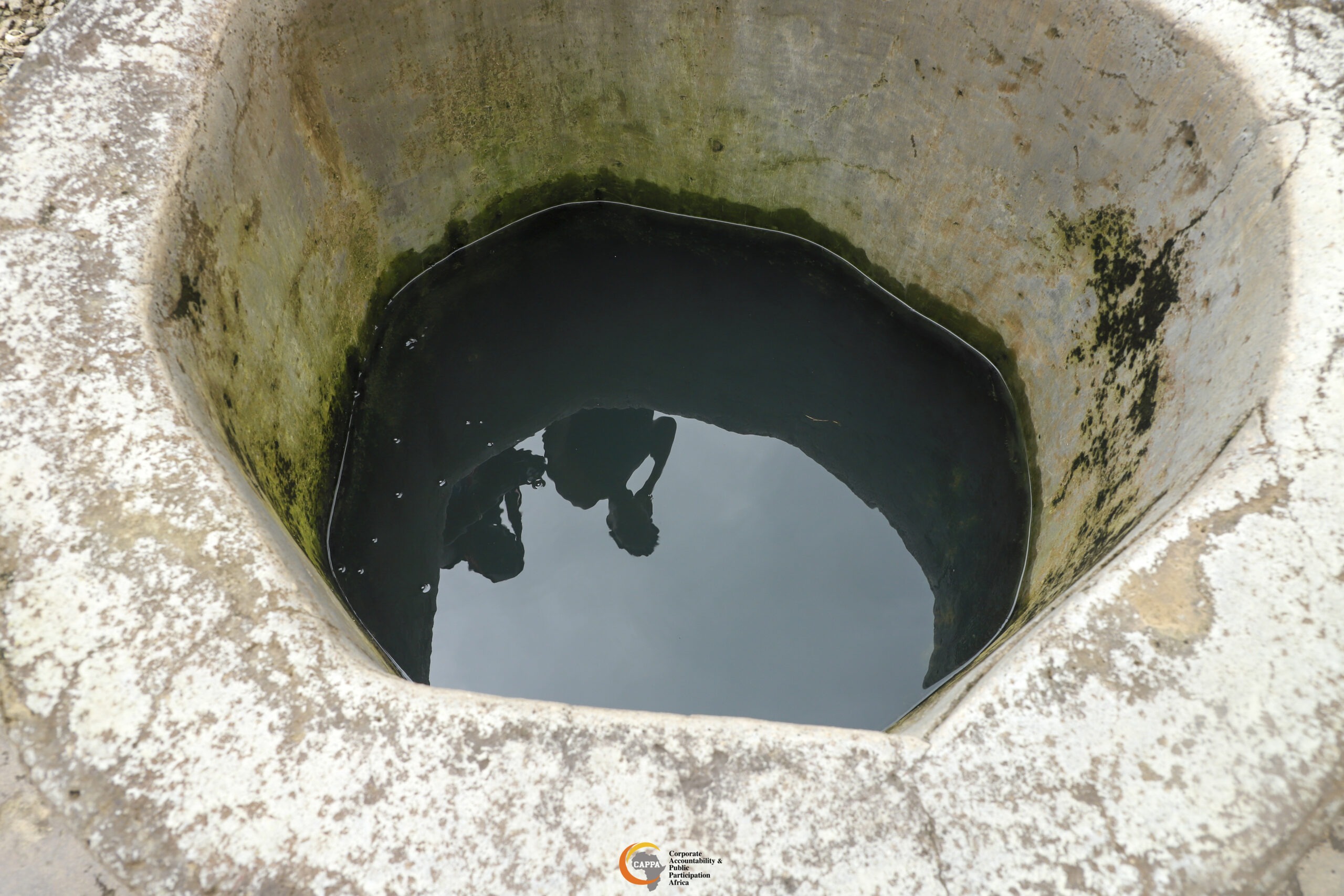
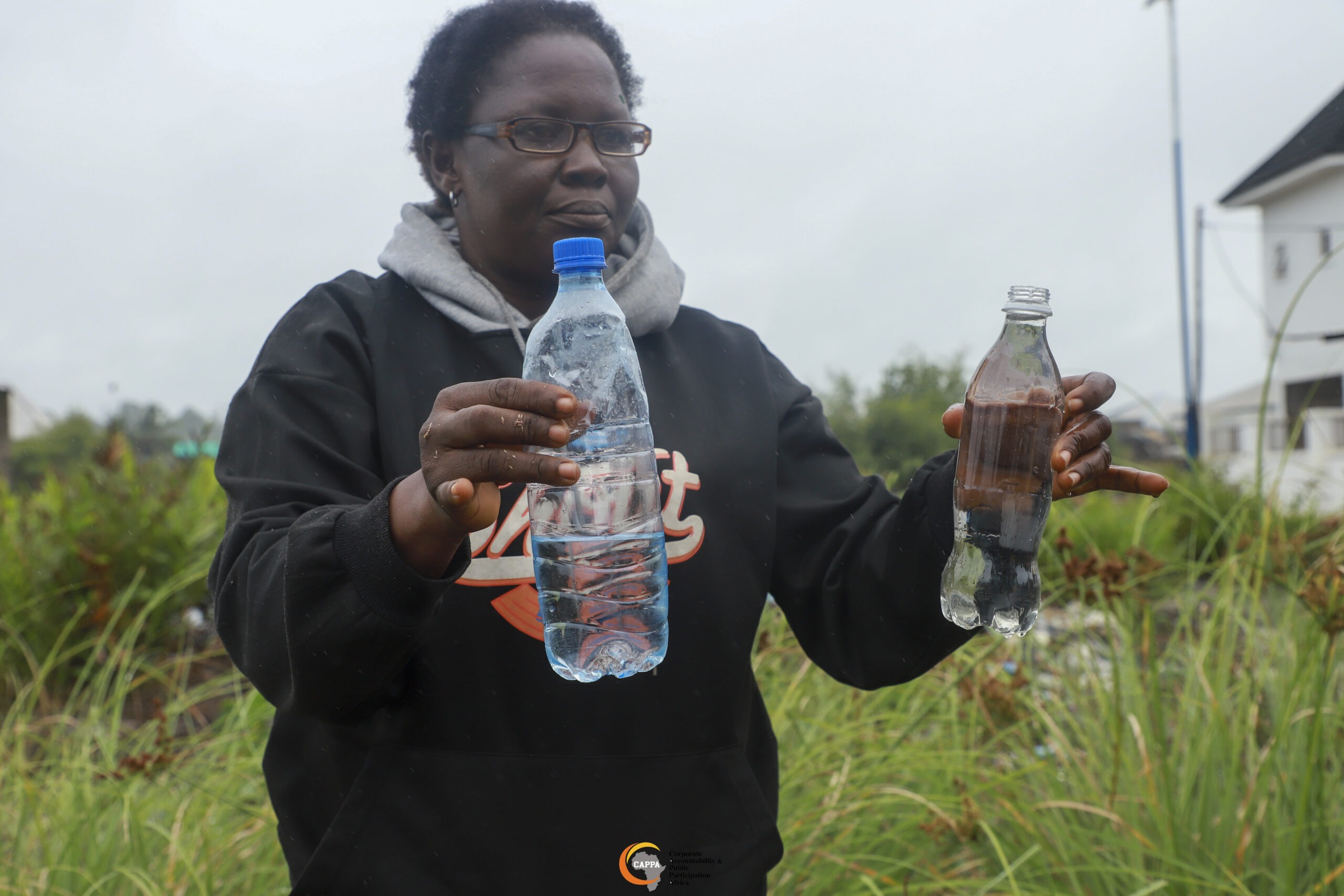
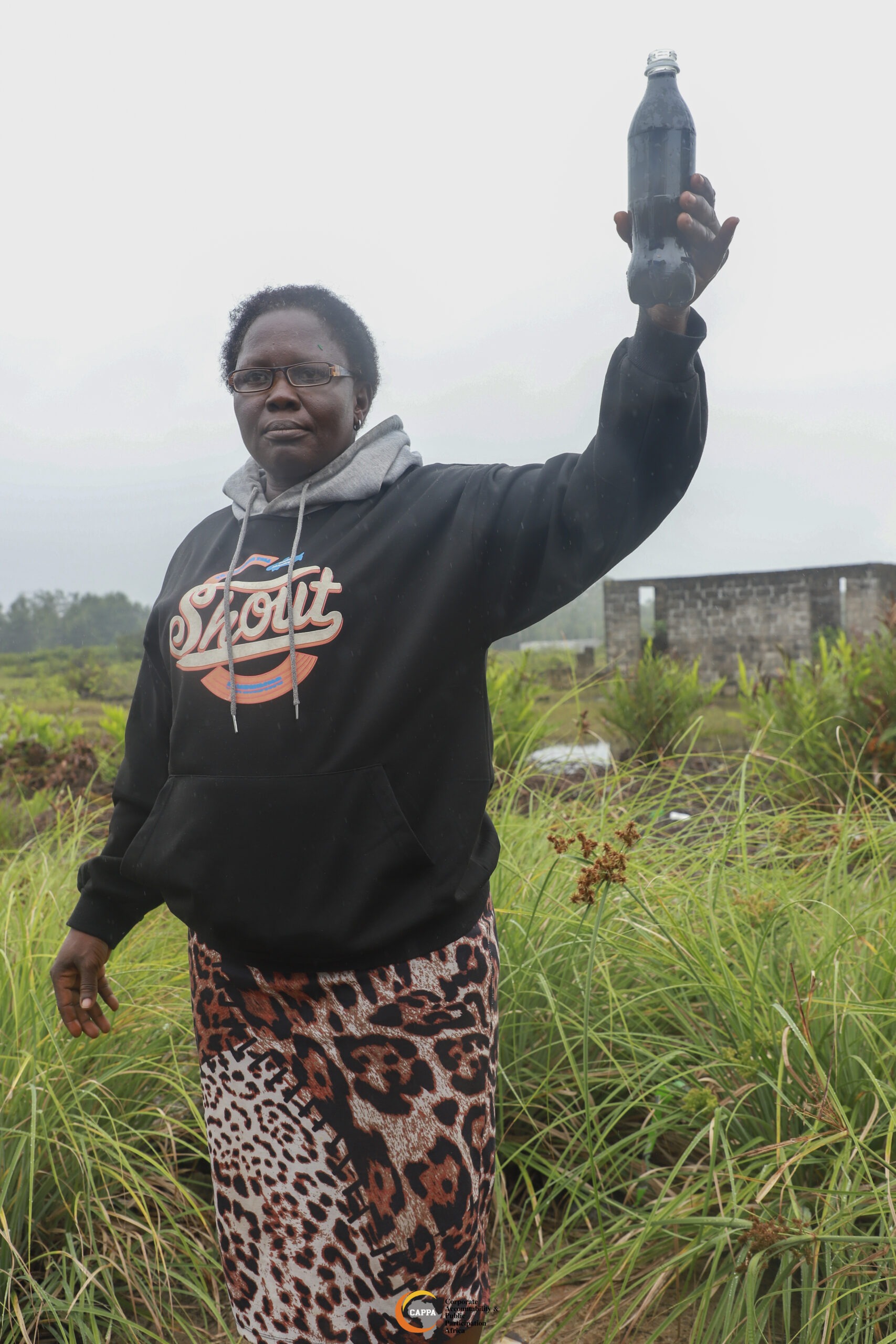
The borehole is one of many locations where residents say the issue has been recorded. In another compound, water drawn from a borehole into a transparent container appeared clear at first but darkened within moments until it turned pitch black. Across the community, a sulphurous odour—often compared by residents to rotten eggs—now hangs in the air, a constant reminder of the crisis unfolding beneath the ground.
Inside an Unresolved Gas Emergency
Bille is an oil- and gas-producing riverine Ijaw kingdom in Degema Local Government Area of Rivers State. According to the Bille Development Agenda, the kingdom comprises Bille Town and 29 surrounding settlements, with an estimated population of about 77,000 as of 2019, including roughly 41,000 residents of Bille Town.[1]
Fishing has long been central to the local economy. Men and women travel through the waterways to catch fish and gather periwinkles and other aquatic foods from the mangroves and tidal flats. Canoes, fishing nets and boats moving between settlements form part of the kingdom’s daily rhythm. Since the gas bubbling began, however, residents say environmental contamination has steadily curtailed fishing and deepened the hardship facing families that depend on the creeks.
According to Joel Siepiribo MpakaBuari, Secretary of the Bille Kingdom Youth Federation, the consequences extend beyond environmental damage to people’s health and livelihoods.
“We are suffering. Our houses are now filled with methane, based on the preliminary tests that have been carried out. No one can survive with such a concentration of gas. Our parents are complaining of respiratory tract infections. People are vomiting because of this gas bubbling. People are falling sick with all manner of illnesses,” he said.
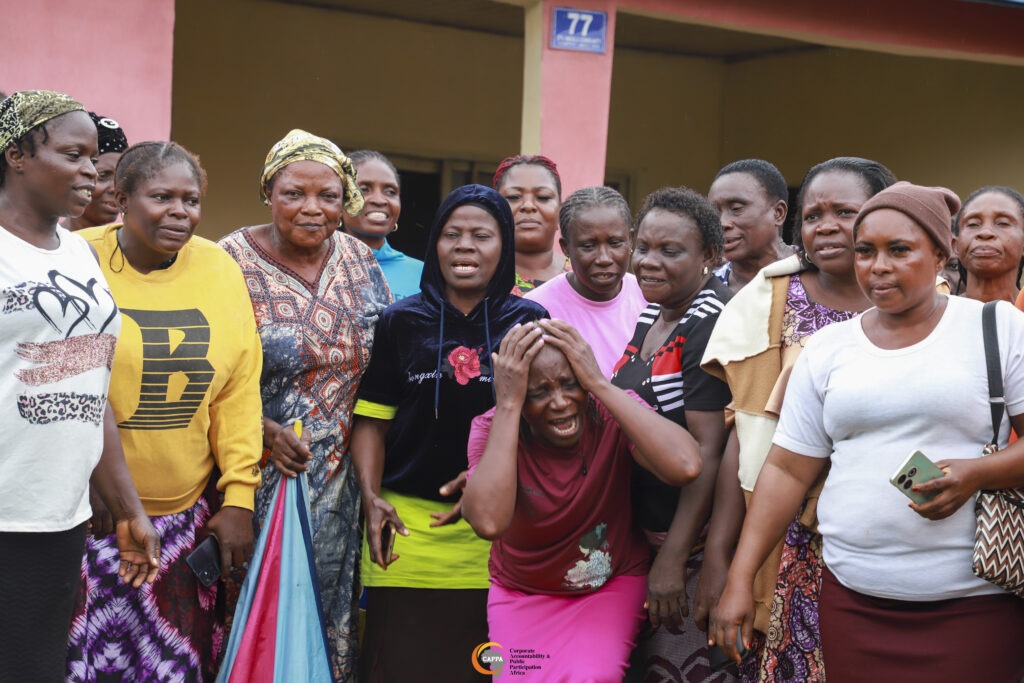
CAPPA encountered similar concerns across the community. During interviews, several women rolled up their sleeves and pointed to rashes on their arms and bodies, describing persistent itching and other health complaints they associated with the crisis. At one point, a group of women broke into a mournful chant:
‘‘Gas e dey our body…”
The refrain spread through the gathering as other women joined in. The situation has placed a disproportionate burden on women. As primary caregivers in many households, they are caring for sick relatives while trying to secure safe water for drinking, cooking and bathing. Even preparing a meal now requires careful planning. Around the affected sites, women say they dread cooking because an open flame could ignite the gas.
“What we do now is pray to Almighty God before we cook our meals and again before we go to bed. It is only by God’s grace that we are still alive. We cannot cook anywhere near where the gas is bubbling because it is highly flammable. If you strike a match there, it can catch fire immediately,” said Obuta Aaron Igani, who lives in Opu Okira Compound in Bille.
Igani’s compound is one of several where gas continues to bubble from the ground, both outside homes and inside rooms. Some families have begun cooking elsewhere. Others say they have little choice but to live with the risk.
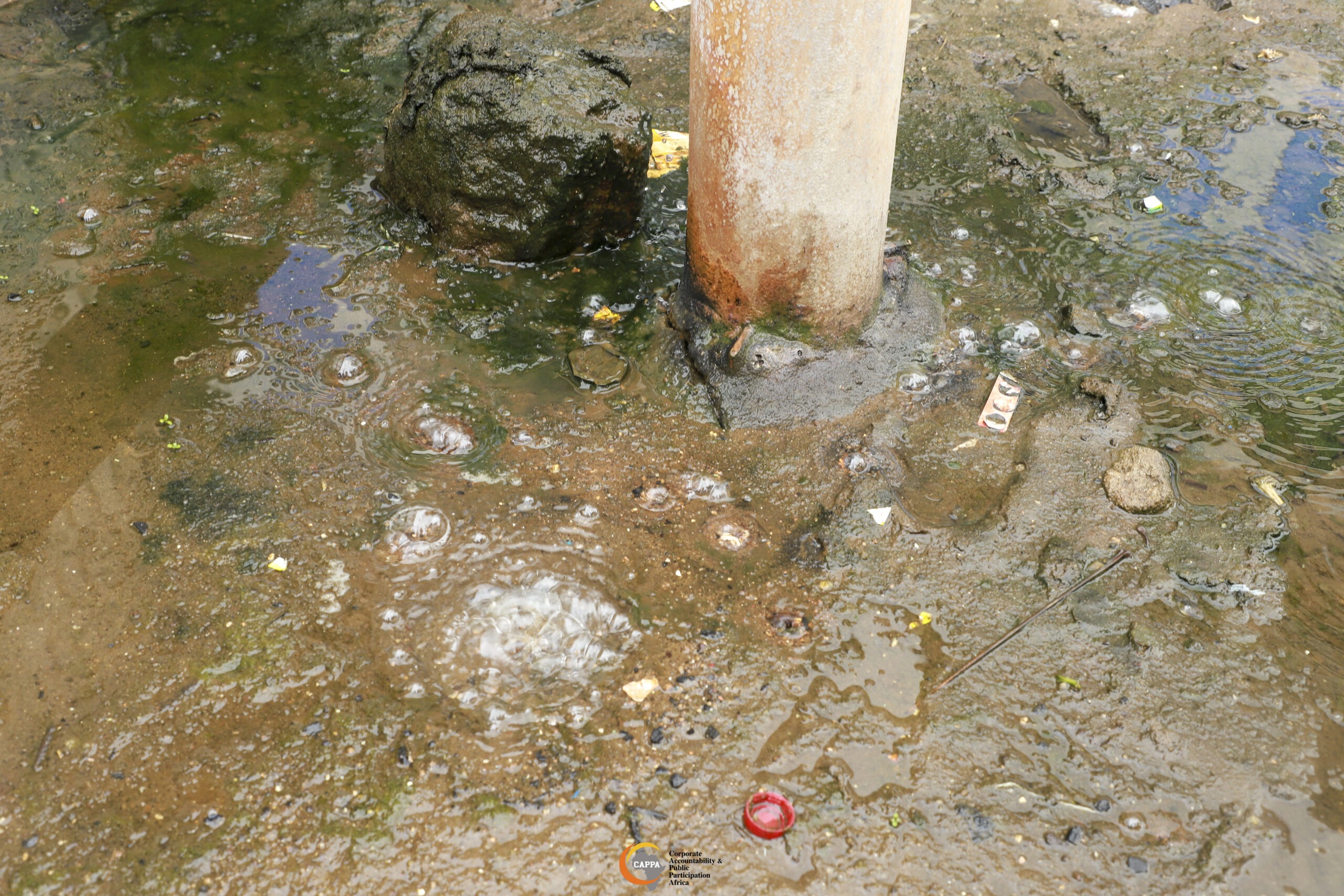
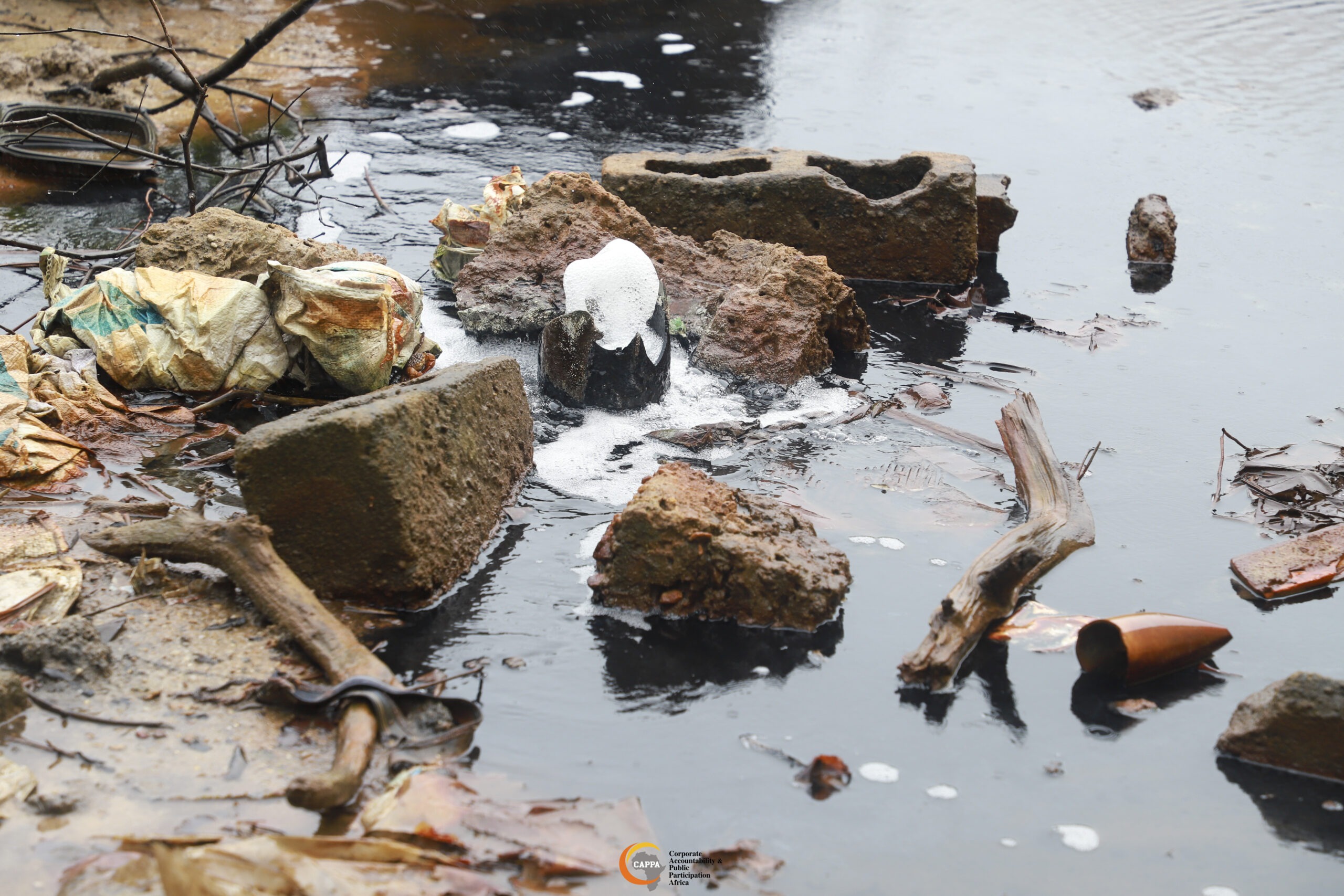
The danger affecting life inside Bille’s homes extends to its learning spaces. At State School One, CAPPA observed gas bubbling from parts of the school grounds. Yet no temporary learning facility had been provided by the time of the visit, and the school had no publicly communicated health protocol for responding to further exposure. Teachers said the bubbling and fumes had forced intermittent closures.
Moses Saki-Emi, a Basic Six English teacher, said pupils and teachers had been falling ill since the bubbling began. Saki-Emi said health workers had linked cases of vomiting and diarrhoea reported at the school to gas exposure.
“I cannot teach when my pupils are sick. The field used to be where the children play football, participate in sports, and engage in other activities. We have had to suspend all of that because of the issue, and there is nothing we can do about it. We want the government to come to our aid quickly,” Saki-Emi said
Visits and Unanswered Questions
The emergency in Bille has prompted repeated visits by government officials, regulators and representatives of oil and gas companies operating in the area. Teams from the National Oil Spill Detection and Response Agency (NOSDRA), the Nigerian Upstream Petroleum Regulatory Commission (NUPRC), the Federal Ministry of Environment and the Federal Ministry of Petroleum Resources have inspected affected locations and collected soil, water and gas samples.
During a Federal Government delegation’s visit to Bille on July 1, NUPRC disclosed that preliminary investigations had confirmed contamination of the community’s first aquifer. The Commission also announced that it had engaged an international firm to undertake further geological studies.[2]
More information emerged on July 30 when the House of Representatives Committee on the South-South Development Commission questioned officials from NOSDRA and NUPRC over the prolonged emergency. NOSDRA told lawmakers that its investigations had confirmed elevated concentrations of methane, hydrogen sulphide and carbon dioxide, together with groundwater contamination, deteriorating air quality and associated health risks.[3]
NUPRC, for its part, said joint investigations involving Renaissance Africa Energy Company, Newcross Exploration and Production, NNPC Eighteen Operating Limited and representatives of the Bille community had detected methane along an approximately 1.5-kilometre stretch of the affected area. The Commission maintained that it had found no evidence linking the emissions to existing oil and gas infrastructure and stated that preliminary findings suggested the gases were migrating from deep underground reservoirs.
The NUPRC’s claim that the emissions are unconnected to existing petroleum infrastructure is, however, hard to evaluate without public evidence. Key geological reports, lab results, sampling data, and infrastructure records supporting its stance remain unpublished. Questions over the availability of infrastructure records have further underscored the need for greater transparency. During the hearing, lawmakers referred to a section of NOSDRA’s report suggesting that NUPRC lacked pipeline records for parts of the affected area.[4]
While NUPRC rejected the claim by insisting its pipeline records were complete and NOSDRA subsequently explained that the passage reflected feedback from an earlier stakeholders’ meeting which may have created a misleading impression, these conflicting accounts raise serious questions about whether the regulators have been working with complete, current and reconciled information on petroleum infrastructure in the region
Despite the gravity of the situation and public assurances by state and regulatory authorities, community members say little has been done to help them cope with the emergency. They remain without a clear explanation of what is happening, practical safety guidance or adequate relief. Local sources told CAPPA that the roughly 3,000 bags of sachet water, popularly known as “pure water”, delivered by boat during the organisation’s visit represented the only direct relief the community had received since the crisis began. They described the quantity as grossly inadequate for a town of tens of thousands of people whose wells and boreholes had become unsafe.
Households now depend heavily on sachet water for drinking, cooking, bathing and other domestic uses. A bag sells for as much as ₦1,000 in the area, with some families using up to 10 bags a day. For households already struggling with dwindling fishing incomes, securing water consumes money that would otherwise pay for food and other necessities. As the crisis remains unresolved, its costs continue to be transferred to those least able to bear them.
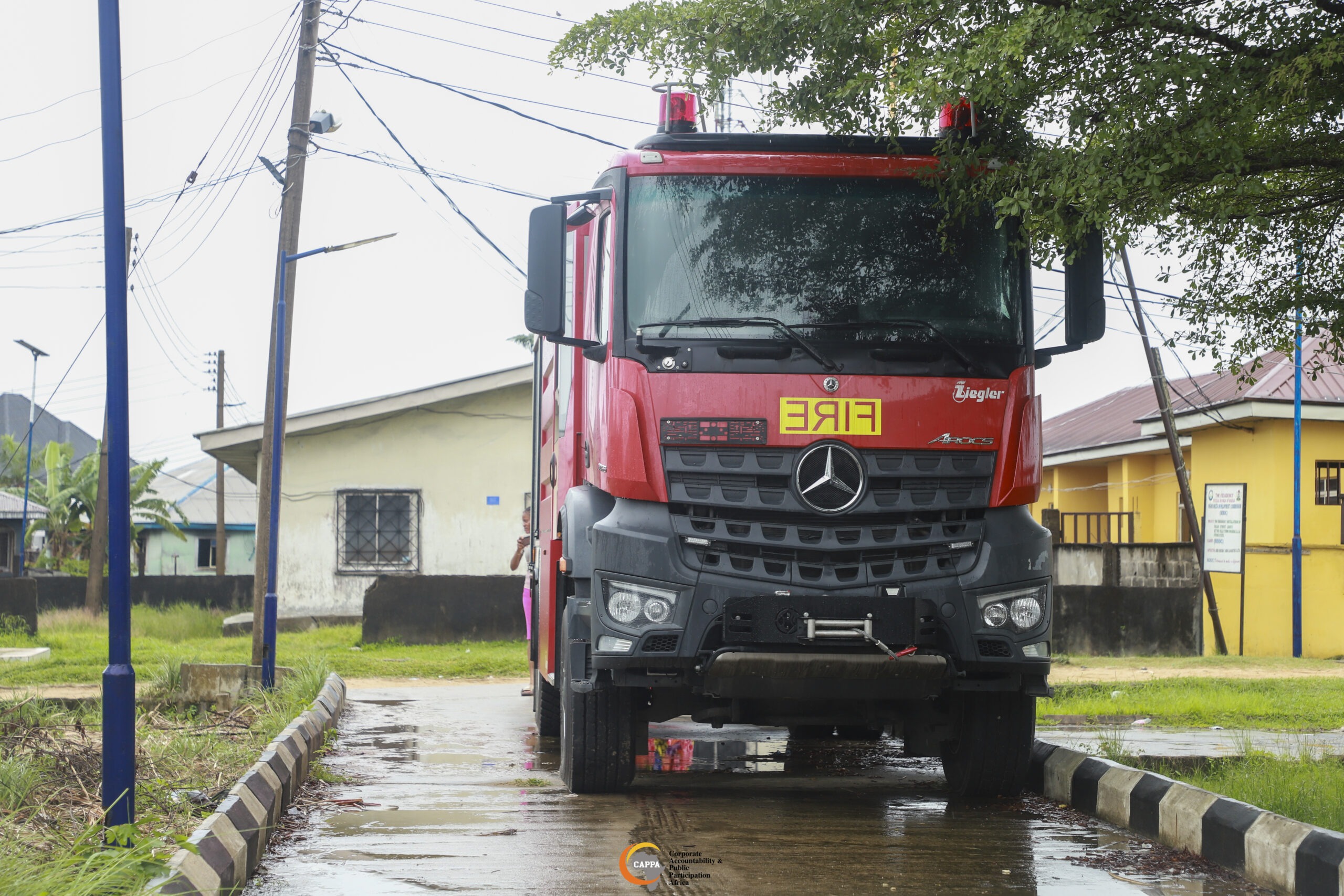
Elsewhere in the community, a fire truck donated by NNPC Ltd stood locked and unused. CAPPA found no trained operator or emergency crew assigned to it. Even if made operational, the vehicle would struggle to reach many affected locations because much of the settlement is accessible only through narrow pedestrian paths between houses.
“Before us is a fire truck donated by NNPCL to Bille to help put out fires, but we want them to do better. We want them to train us on how to respond and put out fires if they occur. We need solutions like that. Above all, Bille needs a clean-up. We want the Federal Government to do the needful,” said Allison Asikiya, a Bille resident.
A Longer History of Extraction and Pollution
Bille’s present emergency adds to a much older history of extraction and environmental damage.[5] The kingdom lies within a heavily industrialised petroleum corridor. The wider landscape includes OML 18, operated by NNPC Eighteen Operating Limited, and assets operated by Renaissance Africa Energy Company, formerly the Shell Petroleum Development Company of Nigeria.[6]
Like many oil-producing communities in the Niger Delta, Bille has borne the environmental and social costs of extraction without receiving public services or economic security commensurate with the wealth generated from its territory. Fishing grounds have deteriorated, water sources have become unsafe and households now spend heavily to obtain what the surrounding creeks and aquifers once provided. As petroleum assets change ownership, lines of responsibility can become increasingly fragmented, while polluted land and the burden of establishing liability remain with host communities.
In 2015, Bille and Ogale communities commenced proceedings in England against Shell plc and the Shell Petroleum Development Company of Nigeria, then Shell’s Nigerian subsidiary, seeking compensation and other remedies for extensive oil pollution. In February 2021, the UK Supreme Court allowed the communities’ appeal, ruling that their case raised real issues to be tried and permitting the litigation to continue.[7]
A preliminary issues trial in 2025 considered, among other questions, whether the claims were barred by Nigerian limitation law and whether oil theft, sabotage or other third-party interference could shield a pipeline operator from liability. The High Court of Justice of England and Wales held that the five-year limitation period prescribed by the Rivers State Limitation Law applies to the private-law claims brought under Nigeria’s Oil Pipelines Act, the Petroleum Act 1969 and Nigerian common law.[8] The court found, however, that where trespass is alleged, a new cause of action arises each day that oil remains on a claimant’s land. Other claims may also generate fresh causes of action where the claimant proves repeated negligence or another recurring legal breach. As these older pollution claims move towards trial in March 2027, Bille is confronting a new environmental emergency that demands urgent action.
What Bille Requires Now
- Nigerian authorities must commission a transparent and independent investigation involving relevant regulators, environmental and public-health experts, and representatives chosen by Bille. The investigation must map every affected location and determine the source, composition and extent of the contamination.
- NUPRC, NOSDRA, the Federal Ministry of Environment and other relevant agencies must publish the results of every gas, soil and water sample already collected. They must explain the risks, findings and necessary precautions directly to residents.
- NUPRC must publish a current inventory and integrity assessment of every active, ageing, idle and abandoned pipeline, flowline, well and petroleum installation across Bille. The assessment must identify ownership, operational status, maintenance history and structural condition, and require unsafe or disused infrastructure to be isolated, repaired or decommissioned.
- Federal and state authorities must ensure an uninterrupted supply of safe water sufficient for Bille’s population. Emergency provision must cover drinking, cooking, bathing and sanitation rather than depend on irregular deliveries of sachet water.
- Public-health authorities must provide comprehensive medical screening and treatment for affected residents, supported by continuing surveillance of illnesses associated with exposure and a clear referral system for serious cases. Care must be provided without cost to households.
- State and Education authorities must immediately protect pupils and teachers by providing temporary learning facilities away from affected grounds and establishing clear health protocols for school closures, evacuation and safe return.
- The Federal Government must establish a coordinated and functional emergency-response system involving the National Emergency Management Agency (NEMA), the Rivers State Government, relevant health and environmental authorities, NOSDRA, NUPRC and representatives chosen by Bille. Local responders must be trained and equipped, the donated fire truck made operational, suitable fire extinguishers provided at accessible points and an evacuation plan developed for the kingdom’s narrow paths and waterways.
- Any managed evacuation must be based on an independent and publicly disclosed health and risk assessment. Temporary relocation must be government-funded and developed with residents, with adequate accommodation, water, food, medical care, education and livelihood support. It must protect residents’ homes, property and land rights and must not become a pretext for permanent displacement.
- Authorities must compensate affected households and support the recovery of fishing and other livelihoods damaged by the emergency. Emergency assistance must not be delayed until the source of the seepage or the responsible party has been conclusively established.
- Authorities must publish and enforce a binding timetable assigning clear duties, deadlines, funding commitments and reporting obligations to every relevant agency and operator. The costs of the emergency must not continue to be transferred to Bille’s households.
- The Nigerian government should consider a precautionary suspension of oil and gas operations in Bille until a public inventory and assessment of all petroleum infrastructure across the kingdom have been completed, the source and migration pathway have been independently investigated, NUPRC’s conclusion that existing facilities are unconnected to the seepage has been independently reviewed, and regulators have determined which activities can safely continue.
[1] https://www.billedevelopment.com/developmentagenda.html
[2] https://www.nuprc.gov.ng/media/news/60c0ceb369b87b4ddbf16bb6
[3]https://www.vanguardngr.com/2026/07/reps-probe-prolonged-bille-gas-leak-demand-urgent-action-as-emissions-persist/
[4]Ibid
[5] Alame and others -v- Shell and others – Courts and Tribunals Judiciary
[6] https://www.nnpcgroup.com/insights/appointment-of-replacement-operator-for-oil-mining-lease-18-in-place-of-eroton-exploration-and-production-limited
[7] https://www.supremecourt.uk/cases/uksc-2018-0068
[8] Alame and Others v Shell Plc and Another [2025] EWHC 1539 (KB), High Court of Justice, King’s Bench Division, judgment of Mrs Justice May, 20 June 2025. Official Judgement
View more photographs from Bille here: https://bit.ly/3TEaF83
All photographs are copyrighted. If reproduced or used, please credit Corporate Accountability and Public Participation Africa (CAPPA) or Olalekan Fagbenro/CAPPA, as appropriate.