Reflections Ahead of the 2026 UN Water Conference
As preparations build toward the 2026 UN Water Conference, a key stop on the road was the Dakar High-Level Preparatory Meeting held in Senegal between 25 and 27 January 2026. Organised by the Government of Senegal and the United Arab Emirates (UAE), in collaboration with the United Nations, the meeting brought together member-states, government officials, academics, civil society actors, youth, women’s and indigenous groups, private sector representatives, and UN agencies to deliberate on the accelerating global crisis and shape priorities ahead of the Conference.
While participants reached a broad consensus on the worsening nature of the problem, sharp differences surfaced over its underlying causes and the most viable solutions. A major thread that ran through the conversations was the critical issue of financing. During one plenary session focused on Investment for Water, the World Bank highlighted a staggering funding shortfall of roughly USD 1 trillion, which continues to obstruct progress toward universal access to safe water and sanitation. As a result, about 3.4 billion people worldwide still lack safely managed sanitation, 2.1 billion do not have access to safe drinking water, nearly 4 billion experience water scarcity, and by 2050, up to 6.5 billion people may be unable to secure sustainable food production under current water management practices.[1]
Against this backdrop, much of the discussion focused on how to close these gaps. Many speakers promoted market-oriented solutions, urging governments to unlock so-called bankable investments, attract private capital, and apply financial logics to expand infrastructure and service delivery. The World Bank, while acknowledging water insecurity as a risk multiplier that threatens growth, jobs, and stability, advocated differentiated strategies that prioritise institutional strengthening in less mature markets, blended finance in middle-income contexts, and capital-market instruments in more advanced settings, all aimed at unlocking private capital flows. While increased funding is clearly necessary, the dominant framing that more investment, of any kind, offers the primary solution risks flattening a far more complex reality. It can misdirect resources, privilege projects that promise returns over those that meet public need, and entrench a narrow diagnosis.
This tension becomes clearer when the analytical lens shifts to Africa, the very continent that hosted the Dakar meeting. Across much of the continent, water systems have historically faltered most sharply not simply because of insufficient finance, but because of the conditions under which reform has taken place. Where robust public stewardship has been weakened or displaced by private or market-led management, service quality, affordability, and equity have often deteriorated rather than improved.
Sub-Saharan Africa has absorbed billions of dollars in water sector financing from the World Bank alone, amounting to more than 8.2 billion United States dollars by 2019 and representing over a quarter of its global water portfolio. Yet persistent access gaps remain. In Nigeria, early World Bank-supported water programmes expanded infrastructure coverage but imposed commercial principles that rendered state water agencies financially fragile, triggered tariff increases beyond household affordability, and failed to deliver universal access. These reforms often proceeded without sufficient attention to local income realities, public accountability, or democratic consent, generating resistance and eroding trust.
In socio-economic contexts marked by inequality, fragile institutions, colonial legacies, and limited democratic oversight, the push for private-led and bankable water projects is especially precarious. Framing Africa’s water challenges primarily as an investment opportunity rather than a governance and rights imperative carries significant risks. It encourages the treatment of water as an extractive asset or blue gold, deepens exclusion for low-income and marginalised communities, and entrenches inequality behind the language of efficiency and financial sustainability.
This critique is not an argument against investment or reform in African water sectors. Indeed, many countries urgently need updated infrastructure, improved efficiency, and sustainable models. The critical questions are: Which investment models? By whom? For whom? And with whose meaningful participation? Without strong public institutions, genuine democratic oversight, community accountability, and a rights-centered approach, simply channeling more finance—even through public systems—will not guarantee universal, affordable access. Instead, it may reproduce or amplify inequality via new financial instruments, public-private partnerships that prioritise returns over equity, or projects disconnected from local realities.
Market-centred approaches also reshape the terms of debate. Attention shifts from people to projects, from rights to returns, and from equity to efficiency. Affordability is treated as a technical variable addressed through subsidies or blended models rather than as a political question of public finance, redistribution, and social obligation. Large-scale infrastructure projects dominate policy attention, while community-managed systems, indigenous governance arrangements, and informal providers that serve much of peri-urban and rural Africa remain marginal to official investment narratives.
A Needed Re-orientation
Case studies highlight viable alternatives. In Dar es Salaam, Tanzania, the 2003–2005 privatisation with City Water Services, a Biwater-led consortium, failed spectacularly, delivering no new pipes, declining service quality, falling revenues, and an eventual contract termination amid mutual accusations. The subsequent shift in 2005 to a public-public partnership between the asset holder DAWASA and the operator DAWASCO, supported by public utilities such as Uganda’s National Water and Sewerage Corporation, stabilised the system without the pressures of privatisation.
In the initial years following this transition, the results were notable. Between 2005 and 2008, revenue collection increased by approximately eighty-five percent without sharp tariff increases. Household connections expanded by more than thirty-five percent, particularly in low-income areas, aided by the introduction of installment-based connection fees. Community-based organisations and non-governmental organisations were formally engaged to extend services in areas beyond the reach of trunk infrastructure through storage tanks, small-scale distribution networks, and public standpipes coordinated with the utility. Anti-corruption campaigns targeted chronic nonpayment, including among political and economic elites, strengthening both revenue collection and public confidence.
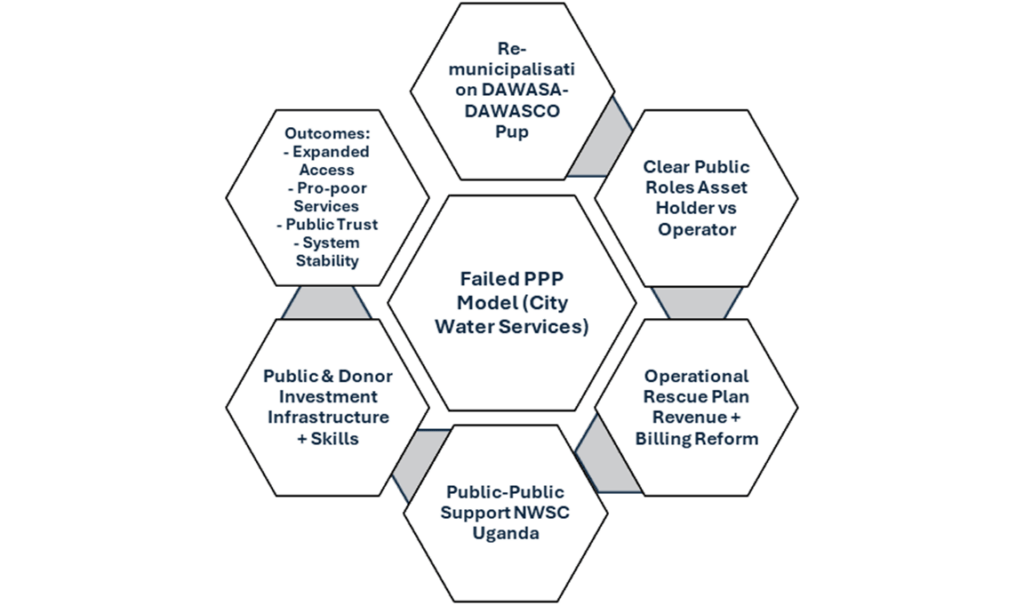
Figure 1: Dar es Salaam’s Public-Public Partnership – Chart by Author
The model was not without limits. Over time, commercial metrics reasserted influence, tariffs rose, staff reductions occurred, and service shutoffs affected those unable to pay. By 2018, many of the earlier equity gains had begun to erode. Yet the experience remains instructive. It demonstrates that publicly anchored systems can expand access, stabilise institutions, and rebuild trust when financial discipline is subordinated to social purpose rather than the reverse.
The relevance of the Dar es Salaam experience becomes clearer when placed alongside evidence from outside Africa. Comparative cases matter not as templates to be copied, but as confirmation that non-market-oriented approaches to water investment are viable across different political and institutional contexts. Colombia’s experience with publicly governed water funds offers such confirmation.
In response to intensifying climate stress, rapid urbanisation, and ecosystem degradation, Colombia developed water funds as a mechanism to secure long-term water availability through collective stewardship rather than asset transfer or profit extraction. One of the most established examples is the Fondo Agua por la Vida y la Sostenibilidad, commonly referred to as FAVS. The underlying logic was that those who depend on water systems should contribute to protecting the ecosystems that sustain them, with investment organised around prevention, conservation, and institutional cooperation rather than revenue generation.
FAVS evolved from watershed protection efforts initiated in the 1990s by water user associations and agricultural actors and later expanded into a formal institutional arrangement involving public water utilities, regional environmental authorities, local governments, and indigenous communities. The fund was constituted as an independent public interest foundation embedded within national legal frameworks. This design insulated it from short-term political turnover while preserving public authority and accountability. No actor acquired ownership of water resources, land, or infrastructure. Financial contributions were non-extractive, nonprofit-oriented, and did not confer control or guaranteed returns.
What distinguishes the Colombian experience is not the volume of finance mobilised, but the way finance was governed. Funding was predictable and patient, drawn primarily from public utilities, environmental authorities, and municipal budgets, with carefully bounded private participation framed as stewardship rather than control. Investment horizons extended over decades, recognising that ecological restoration and watershed protection do not yield immediate results.
The outcomes reinforce a critical lesson. Water security improved through sustained reinvestment in the ecological systems that underpin water availability, supported by strong public institutions and shared responsibility. Where governance was robust, the water fund amplified public capacity rather than substituting for it. This confirms that finance for water does not need to be driven by market logic to be effective. When investment is framed as collective risk management and ecological stewardship, it can strengthen institutions, protect water sources, and include communities without commodifying access.
Placed alongside Dar es Salaam, the Colombian experience demonstrates that alternatives to privatisation are not exceptional. They depend less on income level than on political choice, institutional design, and the willingness to subordinate finance to social purpose. Together, these cases show that viable models already exist for expanding access while preserving equity and public legitimacy.
The investment gap in the global water sector is real, and infrastructure deficits demand urgent action. However, defining success primarily through financial indicators such as cost recovery, capital mobilisation, or project bankability risks advancing investment in water faster than water for people. What is required is a reorientation that judges investment by its social outcomes. Does it expand access for marginalised communities? Does it distribute resources fairly rather than opportunistically? Does it strengthen public institutions rather than hollow them out?
As the 2026 UN Water Conference approaches, the finance-heavy emphasis previewed in Dakar must evolve. Africa’s experience makes clear that water insecurity cannot be resolved through market logic alone. Investment must be governed by rights, justice, and public obligation, with patient finance, democratic oversight, and solidarity at its core. Only then can investment function as a tool for universal access and dignity rather than as an end in itself. Water for the people will not emerge automatically from capital flows. It must be deliberately designed, politically defended, and publicly governed.
References
CAPPA Africa. (2025). Big Debt, Big Thirst: A Case Study of World Bank-Supported Water Projects in Ekiti, Rivers, and Bauchi States. Retrieved February 2, 2026, from https://cappaafrica.org/wp-content/uploads/2025/03/Report-Big-Debt-Big-Thirst-.pdf
Africa Water Action. (2021). Africa must rise: Resist water privatisation. Retrieved February 2, 2026, from https://africawateraction.org/wp-content/uploads/2021/10/Africa-Must-Rise-Resist-Water-Privatisation-final11.pdf
Restrepo, J. D., Masiero, M., & Leonardi, A. (n.d.). Assessing governance and impacts of water funds in Colombia: An institutional analysis. Retrieved February 2, 2026. https://doi.org/10.3390/su172210407
Homsy, G. C., & Warner, M. E. (n.d.). Does public ownership of utilities matter for local government water policies? Retrieved February 2, 2026. https://doi.org/10.1016/j.jup.2020.101057
Park, S., Onufrak, S., Wilking, C., & Cradock, A. (n.d.). Community-based policies and support for free drinking water access in outdoor areas and building standards in U.S. municipalities. Retrieved February 2, 2026. https://doi.org/10.7762/cnr.2018.7.2.91
Rooney, E. (n.d.). Failed privatisation in urban water utilities: Can PuPs pick up the pieces? Reviewing evidence from Dar es Salaam, 2005–2018. Retrieved February 2, 2026. https://doi.org/10.1016/j.geoforum.2024.103998
Pérard, E. (n.d.). Water supply: Public or private? An approach based on cost of funds, transaction costs, efficiency and political costs. Institut d’Etudes Politiques de Paris, France. Retrieved February 2, 2026. https://doi:10.1016/j.polsoc.2008.10.004
World Bank. (2026, January 27). Economic case for investing in water [Slides presented at the plenary]. Interactive Dialogue 6 – Investment for Water, High-Level Preparatory Meeting, UN Water Conference, Dakar, Day 2.
[1] World Bank. (2026). The economic case for investing in water. Plenary presentation, Interactive Dialogue 6: Investment for Water, High-Level Preparatory Meeting for the UN Water Conference, Dakar, 27 January 2026.