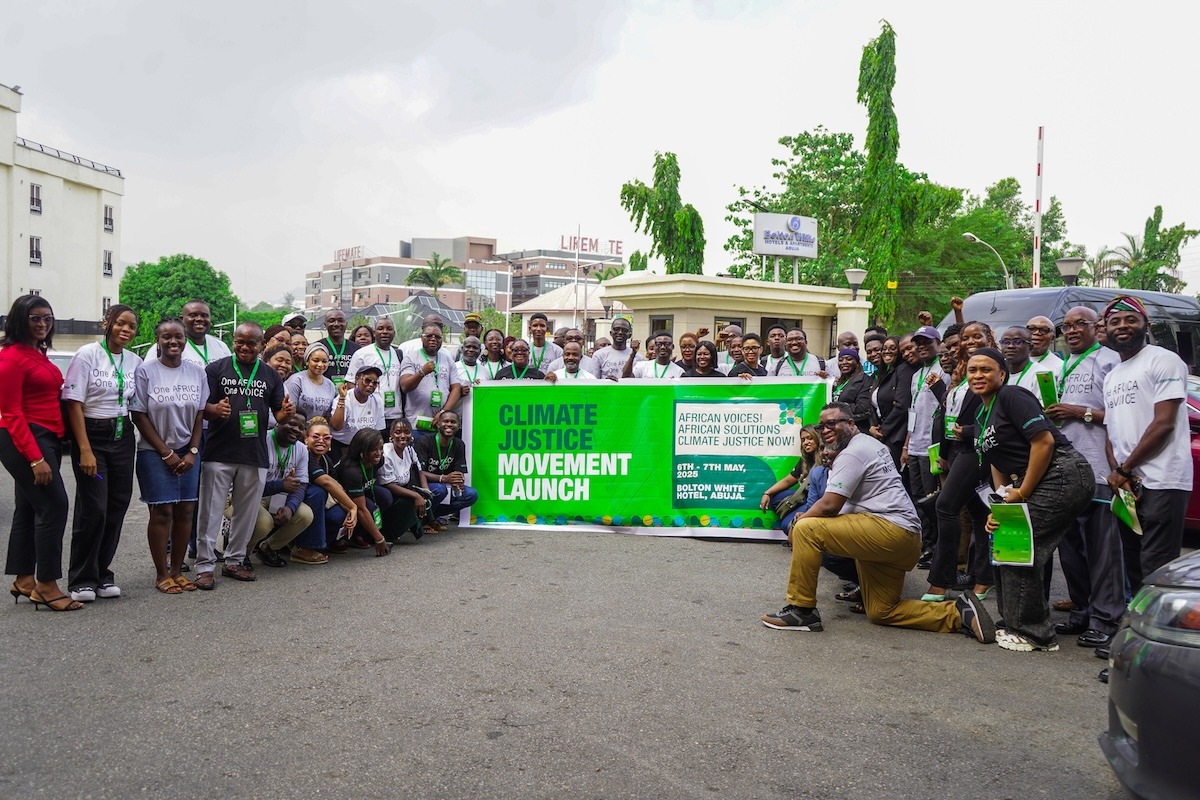
In what could be described as a ground-breaking moment for environmental justice advocacy in Nigeria, Corporate Accountability and Public Participation Africa (CAPPA) joined thirty-nine other civil society organisations to formally launch the Nigerian Climate Justice Movement (CJM). The movement was inaugurated during a two-day meeting held in Abuja on May 6–7, 2025.
The CJM issued a joint declaration committing to holding corporations accountable for environmental degradation, biodiversity loss, and the escalating climate crisis, while also aiming to amplify Africa’s voice in global climate justice negotiations. This coordinated effort signals a major advancement in Nigeria’s environmental movement. Led by Greenpeace Africa, the CJM brings together previously fragmented campaigns and advocacy efforts into a unified platform capable of shaping both national and continental climate policy.

Speaking at the event, CAPPA’s Associate Director of Climate and Environment Programme, Ogunlade Olamide Martins, described the initiative as a major shift for grassroots environmental advocacy in Nigeria. “This declaration marks a turning point. For too long, our efforts have been isolated, even though we face common threats from extractive industries. By coming together under the Climate Justice Movement, we amplify our collective strength and ensure that community voices help define the solutions,” he said.
Martins further emphasised that conversations around reparations and justice must centre on accountability, fairness, and the active participation of affected communities. He stressed that those who have suffered environmental harm should play a central role in shaping redress and response strategies—not the corporations or institutions responsible for the damage.
Representatives from Greenpeace Africa—Sherelee Odayar, Cynthia Moyo, and Elizabeth Atieno—alongside Ibrahim Muhammad Shamsuddin of Yanayl Haki Afriqya, echoed the call for unified resistance. They highlighted the need to empower local communities in their pursuit of justice for what they collectively described as “ecocide”—the large-scale, deliberate destruction of the environment.
The Climate Justice Movement’s declaration outlines a clear set of demands aimed at addressing both environmental damage and systemic social injustices. Key demands include the urgent clean-up of oil-contaminated sites in the Niger Delta, fair compensation for communities impacted by decades of fossil fuel extraction, and a complete halt to gas flaring. The movement also calls for an accelerated shift to renewable energy systems, stronger enforcement of environmental regulations, and a rejection of ineffective or misleading climate policies such as carbon trading.