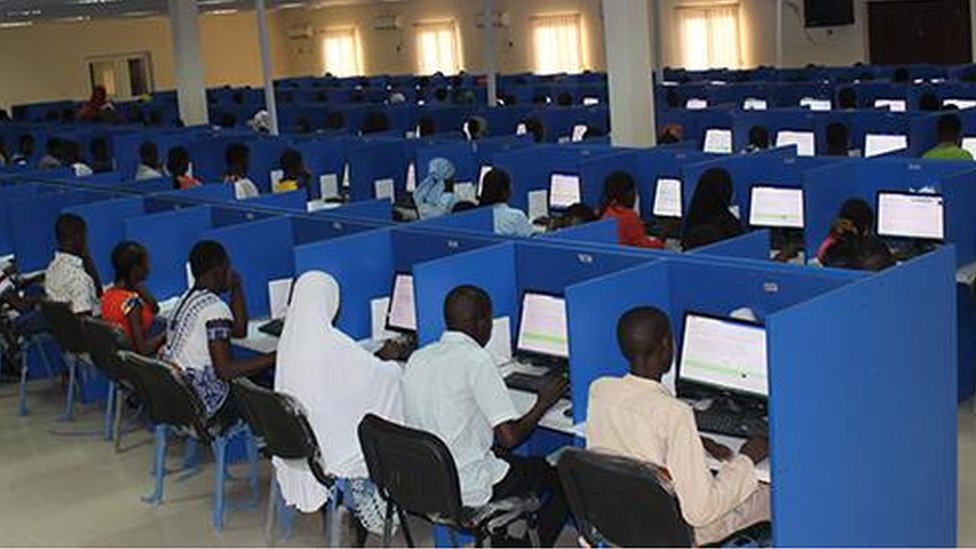
The Corporate Accountability and Public Participation Africa (CAPPA) has bemoaned the mass failure experienced in the 2025 Unified Tertiary Matriculation Examinations (UTME) while urging the Joint Admissions and Matriculation Examination (JAMB) to halt its dismissive attitude toward candidates’ complaints and urgently make provision for an open, democratic and transparent mechanism to review all disputed results.
The civic group made the call in the wake of the controversy generated by the release of results of this year’s UTME, wherein more than 78 per cent of candidates scored less than 200 points out of the 400 maximum obtainable points. Several candidates have kicked against the result while alleging irregularities in the marking and scoring templates utilised by JAMB. Under the hashtag “Thisisnotmyresult”, social media is inundated with complaints by candidates who question the results released by the examination body while alleging a systemic glitch in JAMB as the cause of the mass failure.
Sadly, JAMB has reacted to these complaints in an insensitive manner. In a statement issued last week by its spokesperson, Fabian Benjamin, JAMB dismissed candidates’ complaints with a curt “for us and the system we run, this is a reflection of their performance” adding rather condescendingly that “most ‘brilliant’ candidates fail exams at times because of overconfidence”.
“On previous occasions, we have had reason to caution JAMB for its unfeeling disposition towards candidates and parents anytime the public questioned its integrity. It is sad to note that the same contemptuous attitude is repeated in this case by the examination body when all that is required is compassion and empathy” CAPPA’s Executive Director, Oluwafemi Akinbode said while noting that the fact that JAMB is an examination body dealing with young people and their future makes it incumbent on the organisation to cultivate a more robust, empathetic and public-facing communication strategy.
“Above all, those piloting JAMB’s affairs need to purge themselves of the kind of arrogant disposition reminiscent of the dark days of jackboot military dictatorship when public officials saw themselves as tin gods who cannot be questioned or challenged. Anywhere in the world, students challenge examination bodies when they feel their result does not match their input. What is expected in such an instance is for the examination body to take up the complaints and set up a mechanism to review the mark sheets. For JAMB to insist with a tone of finality and without bothering to even review the complaints being made, that “for us and the system we run, this is a reflection of their performance” is unacceptable and very insulting” Akinbode added.
To this extent, CAPPA has urged JAMB to set up an open, democratic and transparent mechanism to review in a timely manner all disputed results. Such a process must involve the tendering of the mark sheets of the complainants and prompt communication of the outcome to the candidates. Whatever is the outcome of such a review process, we urge JAMB to uphold the rights and protection of the candidates under Nigeria’s 1999 constitution (As Amended) and not embark on any retributive or vengeful action towards any of them.
“We make the above demands without being oblivious of the giant strides JAMB has achieved under the leadership of its Registrar, Is-shaq Oloyede, especially in the improvement of the process of conducting examinations in the country by establishing modern computer-based systems. However as far as we are concerned, no system is infallible. The experience of candidates during the conduct of the UTME last month when many complained about being posted to examination centres far from their town of residence is a clear sign that there is still room for improvement despite the immense progress JAMB has made in a few years. We therefore urge JAMB to be more receptive to public complaints by seeing them as opportunity to grow and improve its processes rather than an attack” Akinbode added.
In conclusion, CAPPA argued that the deplorable performance in the UTME cannot also be divorced from the poor quality of teaching and learning in the country due to government habitual underfunding of education. The group therefore urged the Federal and State Governments to take the sad development as a wake-up call to amend their priorities and rise to the occasion to reposition public education in the country by increasing budgetary allocation to education while also improving the pay and welfare of teachers.