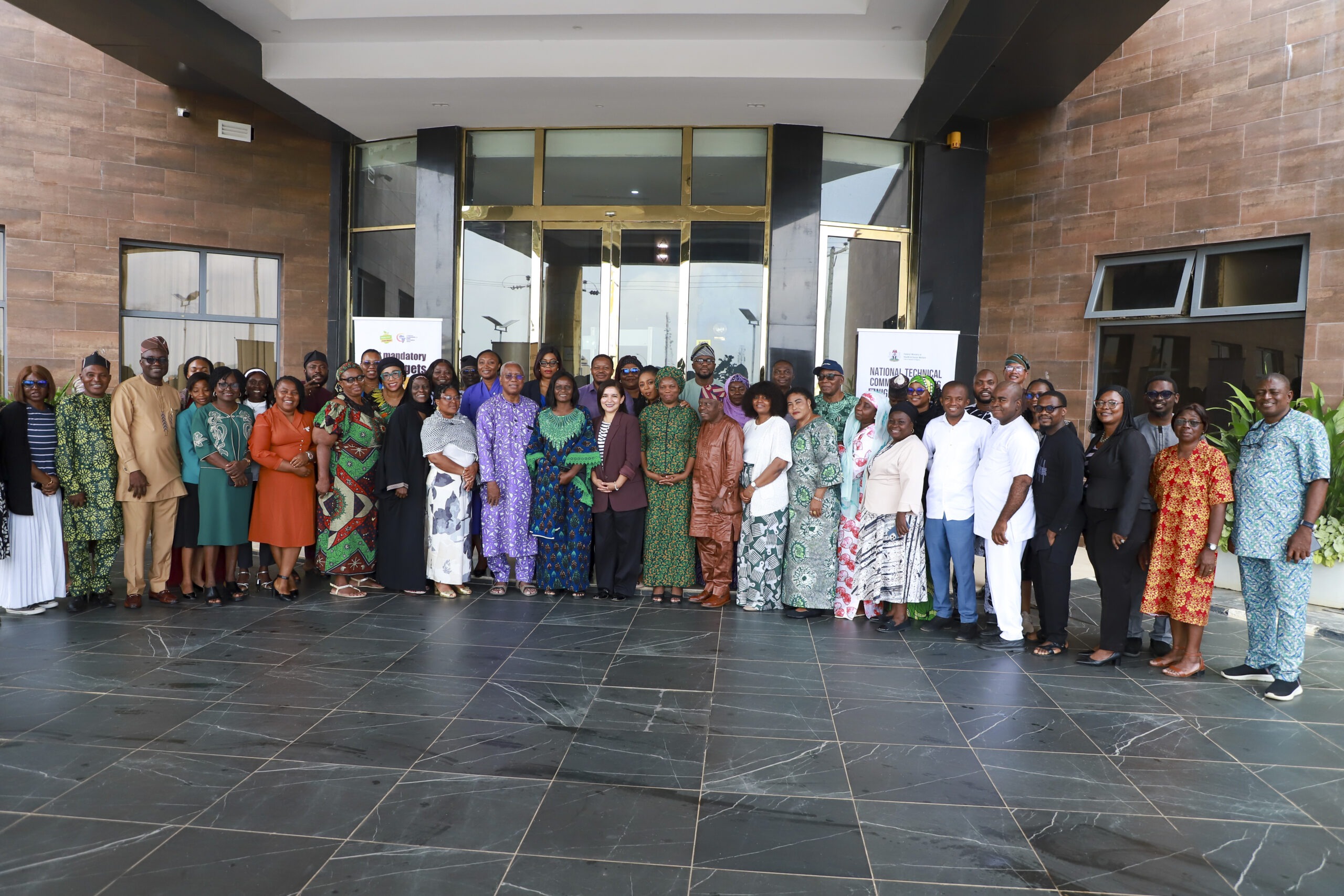
The National Technical Committee on the development of Nigeria’s Nutrient Profile Model met at Villa Park Hotel in Abuja on 13 and 14 October 2026 to review the final draft of the model and its User Guide. The Nutrient Profile Model for Nigeria (NPM-N) sets out a scientific method for identifying foods and non-alcoholic beverages high in nutrients of concern. It is intended to inform front-of-pack labelling, restrictions on food marketing to children and other measures to address the country’s rising burden of diet-related non-communicable diseases (NCDs).
Opening the meeting, Mrs Olufumilola Adegbite, Director of Nutrition at the Federal Ministry of Health and Social Welfare, thanked participants for reviewing the draft and submitting comments. She said the task before the committee was to complete the work already under way by examining the full document, addressing gaps and assessing the scientific case for the model. In their goodwill messages, representatives of ministries, departments and agencies welcomed progress on the model, while state nutrition coordinators said their inclusion was important because states would be directly affected by the outcome.
How the model would work
The first day focused on reviewing and validating the User Guide, also known as the Operational Plan, which explains how to apply the model in practice. Presenting the guide, Dr. Omotola Davis, a consultant to the Ministry, described the NPM-N as a response to changes in Nigeria’s food system and food environment. Its intended users include the Federal Ministry of Health and Social Welfare, the National Agency for Food and Drug Administration and Control (NAFDAC), state health ministries and other relevant state institutions, as well as food safety and public health practitioners, academics and nutritionists.
Davis explained that the guide sets out how nutrient thresholds apply to eligible ultra-processed foods and non-alcoholic beverages. Unprocessed and minimally processed foods, infant foods, supplements and alcoholic drinks are outside its scope. The guide includes a nutrient calculator and provides guidance for assessing products reconstituted before consumption. A communication and implementation framework and a phased rollout plan also support the model’s application. Following his presentation, participants were divided into four groups to review different parts of the guide and present their observations and recommendations for improvement at the plenary session. At the close of the session, Adegbite asked participants to submit any further comments in writing so the Ministry could consider incorporating them into the guide.
The second day focused on the final draft of the Nutrient Profile Model for Nigeria (NPM-N), with participants examining the evidence behind its nutrient thresholds and how the model would be applied. Presenting the draft, Dr Davis Omotola explained that the technical team had adapted the Pan American Health Organization (PAHO) model because it was scientifically grounded, had clear thresholds and could be adapted to Nigeria’s food environment. The thresholds were developed with reference to the World Health Organization’s Population Nutrient Intake Goals and would apply to eligible packaged processed foods, ultra-processed foods and non-alcoholic beverages. Omotola said the model could inform front-of-pack labelling, restrictions on food marketing to children, fiscal and regulatory measures, school nutrition standards and public procurement.
Speaking on behalf of industry, Fred Chiazor, President of the Association of Food, Beverage and Tobacco Employers (AFBTE), proposed setting aside the PAHO model and allowing more time to consider an alternative. Other industry representatives called for greater use of Nigerian evidence, asked how the draft model would account for the informal food sector and requested a clear timeline for product reformulation.
In response to industry’s call for greater use of local evidence, participants pointed to research by the University of Abuja that informed the development of the model. The university examined the levels of sodium, sugar, fats and energy in packaged foods and beverages sold in Nigeria and assessed the products against the proposed nutrient thresholds.
As the meeting drew to a close, participants urged the Federal Ministry of Health and Social Welfare to lead the finalisation of the model and its User Guide. They also discussed how local, state and federal authorities could regulate the informal food sector and use digital tools to track activity within it. The proposed next step was to present the model to the National Council on Health for endorsement. With support from the Global Health Advocacy Incubator (GHAI), CAPPA has been working with the Ministry to develop the model, which would provide a scientific basis for measures such as front-of-pack labelling and restrictions on food marketing to children.