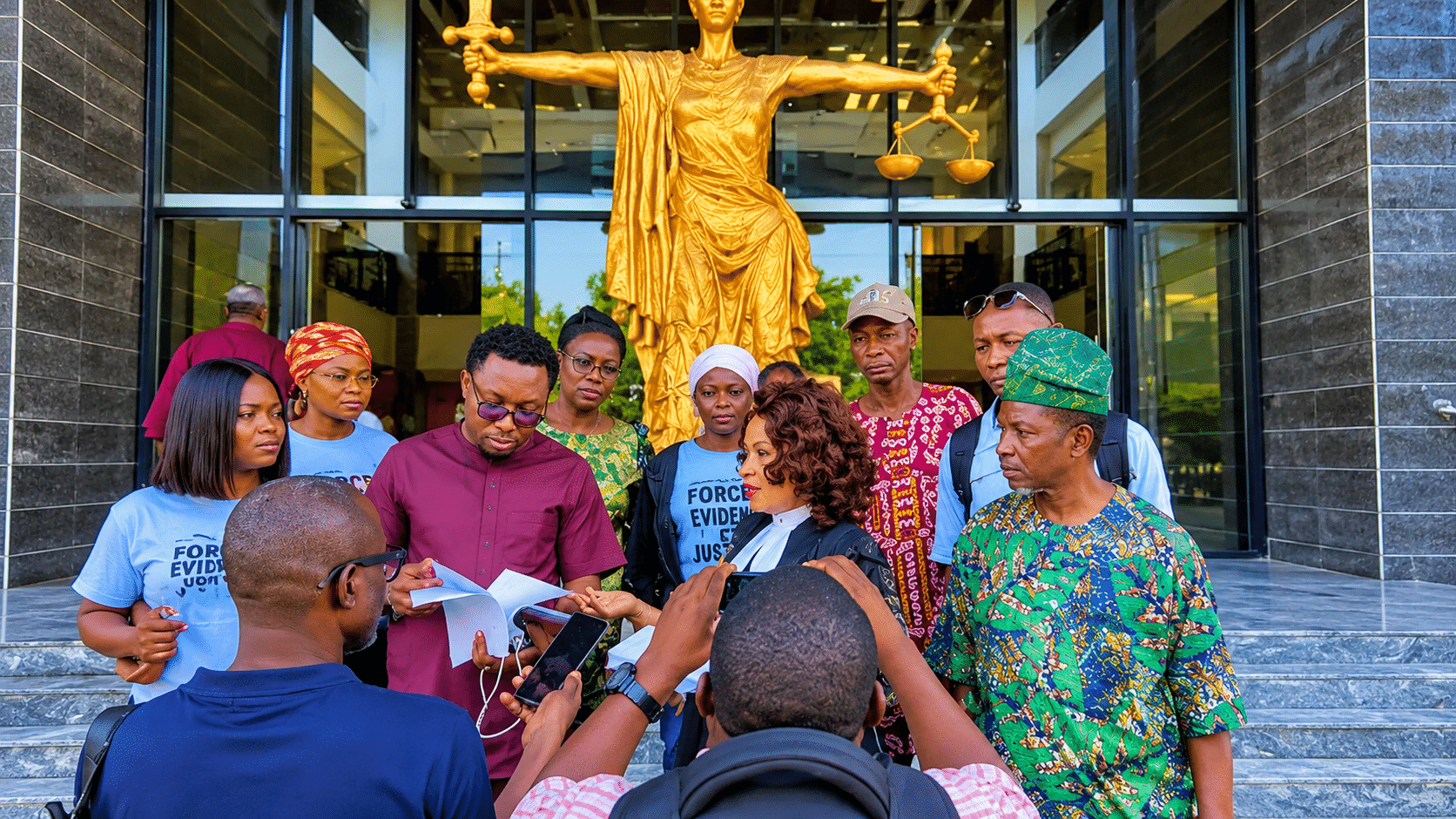
When nearly 5,000 protesters, including residents of Makoko, people from other communities facing eviction, and representatives of civil society organisations, marched to the Lagos State House of Assembly on January 28, 2026, they were demanding answers about forced evictions that had destroyed homes and livelihoods, displaced entire communities, and caused the deaths of babies and adults.
Unfortunately, the police disrupted the peaceful gathering with tear gas, violence, and arbitrary arrests. Activists Hassan Taiwo “Soweto” and Dele Frank, also known as Arole Fela, were forcibly seized, detained overnight and arraigned the following day on trumped-up charges, including that they had sung ‘abusive songs’ against the government and the police. Their prosecution has since become another front in the struggle against forced evictions in Lagos.
On Monday, October 26, the defendants returned to the Yaba Magistrate’s Court for another scheduled sitting, accompanied by residents of Makoko and other affected communities. Proceedings could not go ahead because the presiding magistrate, Mrs I. O. Alaka, was unavailable. The matter was adjourned until January 20, 2027. The case had also stalled at a previous sitting on August 31, when the police prosecutor and prosecution witnesses failed to attend. Defence counsel O. C. Olagunju warned then that the defence would seek to have the charges struck out for lack of diligent prosecution if the prosecution failed to appear again.
In a separate fundamental rights case, Soweto returned to the Federal High Court in Lagos on Wednesday, October 28, for another scheduled sitting. Filed in April, the suit concerns his treatment after police seized him during the January demonstration. Soweto alleges that Jimoh Olohundare Moshood, then Lagos State Commissioner of Police and now Assistant Inspector-General of Police in charge of Zone 2, personally participated in beating him, causing him grave injuries, emotional and psychological distress, and a serious lower back injury. He is now seeking N70 million in damages from Moshood, the Nigeria Police Force and the Police Service Commission.
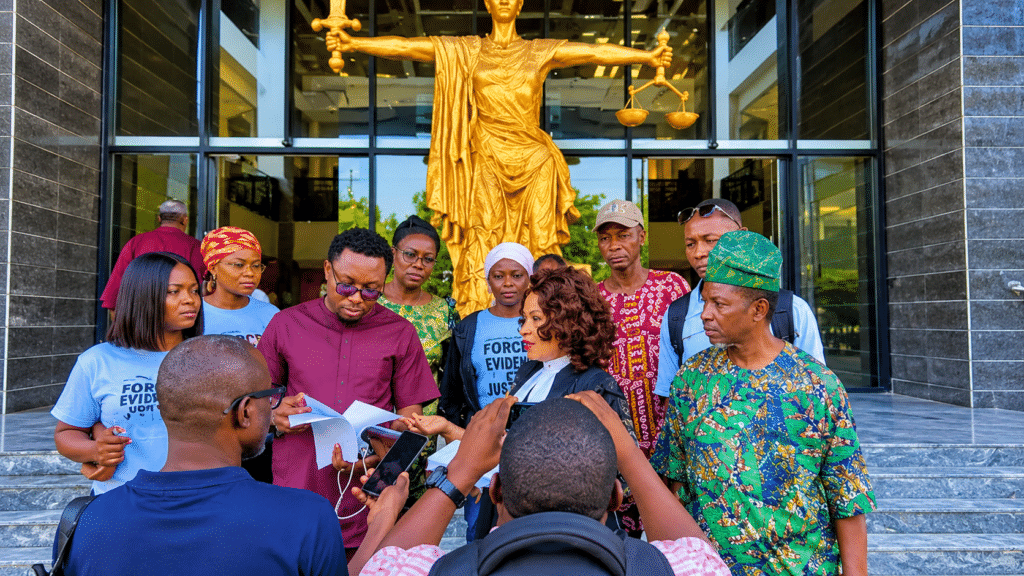
The October 28 proceedings also could not go ahead because the presiding judge, Justice F. N. Ogazi, was absent. The case was adjourned until November 25, 2026.
CAPPA continues to provide media and advocacy support, amplifying community voices and reporting developments in both cases. Through public statements and engagement with journalists, we are sustaining attention on the demolitions, the circumstances of the arrests and the activists’ pursuit of justice. Our intervention also seeks to guard against the isolation and intimidation of communities and activists.