When Ekiti State enacted its Prohibition of Smoking in Public Places law in 2012, the public health conversation was largely focused on tobacco and cigarettes. More than a decade later, the market looks very different. Vapes, nicotine pouches, electronic cigarettes, heated tobacco products, and shisha have become increasingly visible in Nigeria. Often marketed as modern alternatives to conventional cigarettes, these products are gaining popularity among young people and creating new challenges for regulators and public health advocates.
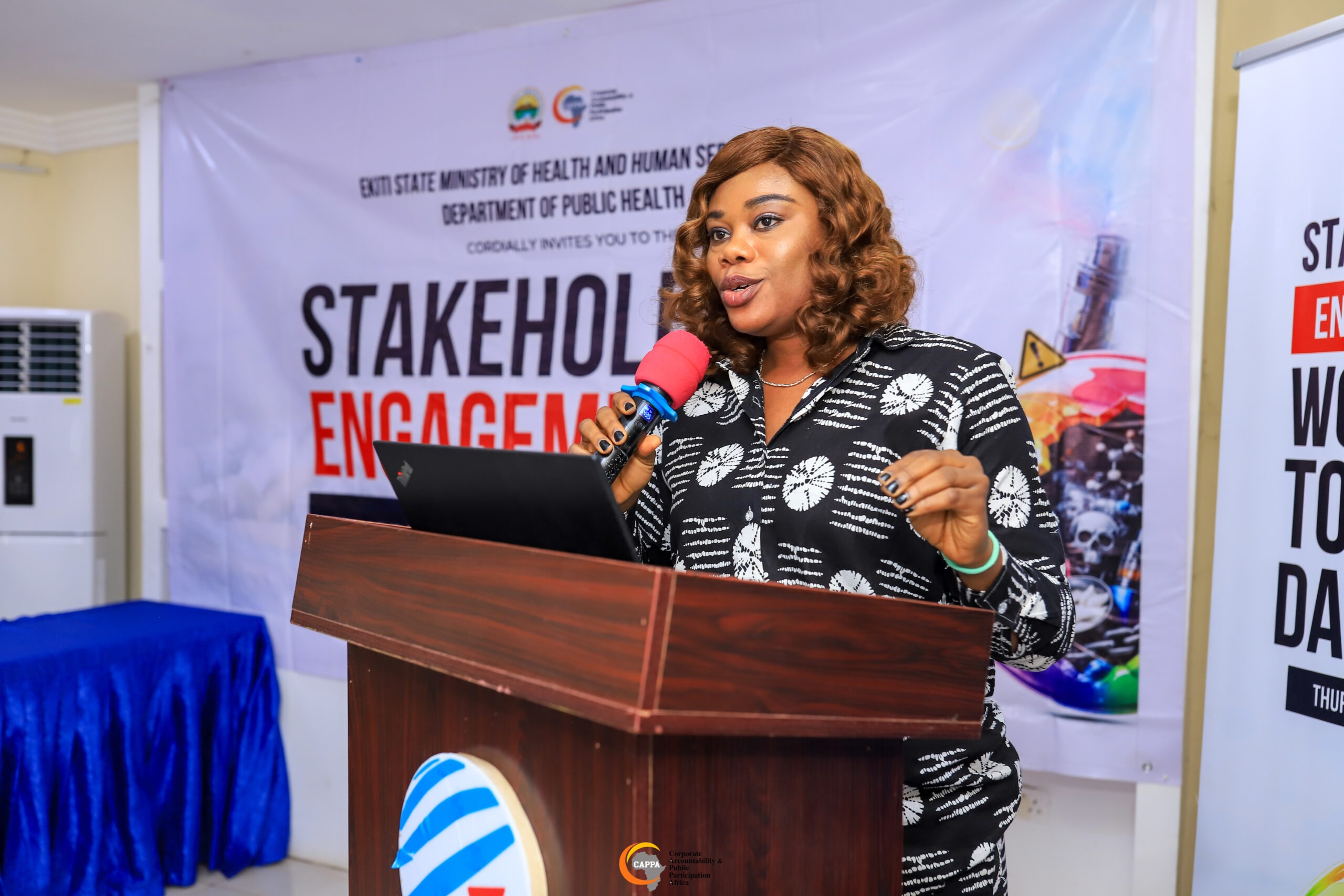
It was against this backdrop that Corporate Accountability and Public Participation Africa (CAPPA), in collaboration with the Ekiti State Ministry of Health and Human Services, convened a World No Tobacco Day 2026 stakeholders’ engagement in Ado-Ekiti on June 4.
The engagement brought together representatives of government ministries, health institutions, regulatory agencies, religious bodies, law enforcement agencies, and the media to discuss how Ekiti can strengthen its tobacco control framework and respond to the growing presence of emerging nicotine products. Participants included officials from the Ministries of Health and Environment, the Hospital Management Board, the Ekiti State Health Insurance Scheme, the State Primary Health Care Development Agency, the Nigerian Security and Civil Defence Corps (NSCDC), the Ministry of Justice, the Christian Association of Nigeria (CAN), the League of Imams, and members of the press.
A Shared Public Health Concern
One of the recurring themes throughout the engagement was that tobacco control requires broad social support. Representatives of both the Christian Association of Nigeria and the League of Imams reiterated their commitment to educating their congregations about the dangers associated with tobacco and nicotine use. They pledged to continue using religious platforms and community engagements to raise awareness, particularly among young people who are increasingly exposed to emerging nicotine products.
The Permanent Secretary of the Ekiti State Ministry of Health and Human Services, Mrs. Sola Gbenga-Igotun, echoed this call for collaboration in her welcome remarks. She noted that tobacco use remains a major public health concern and stressed the need for government institutions, civil society organisations, religious bodies, enforcement agencies, and the media to work together to address the problem. According to her, the emergence of new nicotine products requires renewed attention because many of these products are designed and marketed in ways that appeal to younger consumers.
The Permanent Secretary of the Ministry of Environment and Natural Resources, Dr. Sunday Omoya, also reaffirmed his ministry’s commitment to supporting tobacco control efforts in the state and strengthening collaboration around enforcement and public awareness initiatives.
Presenting on the World No Tobacco Day 2026 theme, “Unmasking the Appeal: Countering Nicotine and Tobacco Addiction”, CAPPA’s Assistant Executive Director, Zikora Ibeh, examined how tobacco companies are adapting their marketing strategies to attract new users. She explained that while public awareness of the dangers of cigarette smoking has increased over the years, tobacco companies have expanded into emerging nicotine products and are promoting them, particularly on digital media through celebrity endorsements and influencer marketing, as cleaner, safer, and more socially acceptable alternatives.
Products such as vapes, e-cigarettes, nicotine pouches, and shisha are often sold in brightly coloured packaging and flavoured with fruit, candy, mint, and other sweet variants. These features, she said, are part of a deliberate effort to make nicotine products more attractive and easier to experiment with, particularly among young people.
Another concern raised during the engagement was the growing use of cultural spaces to normalise tobacco consumption. Referring to tobacco-related scenes that circulated widely on social media during the recent Ojude Oba Festival, Ibeh warned that tobacco use is increasingly being framed as part of lifestyle and cultural expression rather than as a significant public health issue. She called for stronger collaboration among government agencies, schools, communities, religious institutions, public health advocates, and the media to counter the growing appeal of nicotine products and protect future generations from addiction.
Building on Ekiti’s Tobacco Control Record
The second presentation of the day focused on the state’s tobacco control journey and what more needs to be done.
Dr. Abayomi Ibrahim, Director of Public Health at the Ekiti State Ministry of Health and Human Services, described tobacco use as a major public health challenge linked to cancers, cardiovascular diseases, respiratory illnesses, reproductive health complications, and other serious health conditions.
He highlighted several milestones achieved by the state, including the enactment of the Ekiti State Tobacco Control Law in 2012 and the declaration of Ado-Ekiti as a Smoke-Free City during the 2025 World No Tobacco Day commemoration. He also acknowledged CAPPA’s technical support in advancing tobacco control advocacy and efforts to strengthen the state’s legal framework.
Despite these gains, Dr. Ibrahim noted that several challenges continue to affect implementation. These include weak enforcement mechanisms, limited monitoring capacity, inadequate funding, the absence of a dedicated budget line for tobacco control activities, and the growing popularity of products such as shisha, vapes, and electronic cigarettes among young people.
To address these gaps, stakeholders recommended updating the state’s tobacco control law to reflect current realities, strengthening enforcement capacity, establishing dedicated funding mechanisms, expanding public education efforts, and increasing engagement with traditional and religious leaders to promote tobacco-free and nicotine-free lifestyles within communities.