The National Agency for Food and Drug Administration and Control (NAFDAC) convened regulators, public health advocates, researchers, development partners, civil society organisations, and industry representatives in Lagos on April 1, 2026, for a stakeholder consultation on its Draft Reduction of Sodium in Pre-Packaged Foods Regulations.
The proposed regulation seeks to reduce the amount of sodium in processed foods and address a growing public health challenge that experts say is contributing to rising rates of hypertension, stroke, heart disease, and other non-communicable diseases across Nigeria. The concern is difficult to ignore. According to public health authorities, Nigerians consume an average of about 10 grams of salt daily, nearly double the five grams recommended by the World Health Organization (WHO).
While salt is the term most people are familiar with, regulators focus on sodium because it is the component in salt that contributes to many of the health risks associated with excessive consumption. Salt is made up of sodium and chloride, but it is the sodium component that can raise blood pressure and increase the risk of stroke, heart disease, and other cardiovascular conditions when consumed in large amounts. Beyond the salt added during cooking or at the table, a significant proportion of the sodium in modern diets also comes from processed foods, seasonings, bouillon cubes, snacks, and other packaged products.
Opening the meeting, Ms. Eva Edwards, Director of Food Safety and Applied Nutrition at NAFDAC, described excessive sodium consumption as a major contributor to Nigeria’s growing burden of non-communicable diseases. Even though sodium remains essential for nerve and muscle function and helps regulate fluid balance in the body, consuming it far above recommended levels poses serious health risks.
Ms. Edwards explained that the Federal Ministry of Health and Social Welfare (FMOHSW) had already developed National Guidelines for Sodium Reduction as part of efforts to address the problem. NAFDAC’s proposed regulation seeks to give those guidelines legal force and ensure compliance across the food industry. Under the agency’s phased implementation approach, manufacturers will be expected to reduce sodium levels by 15 per cent by 2027 and by a further 15 per cent by 2029. Together, these targets align with the WHO goal of achieving a 30 per cent reduction in population sodium intake by 2030.
According to Ms. Edwards, the strategy is expected to encourage food reformulation, reduce the prevalence of diet-related diseases, and ease the enormous economic burden associated with treating non-communicable diseases.
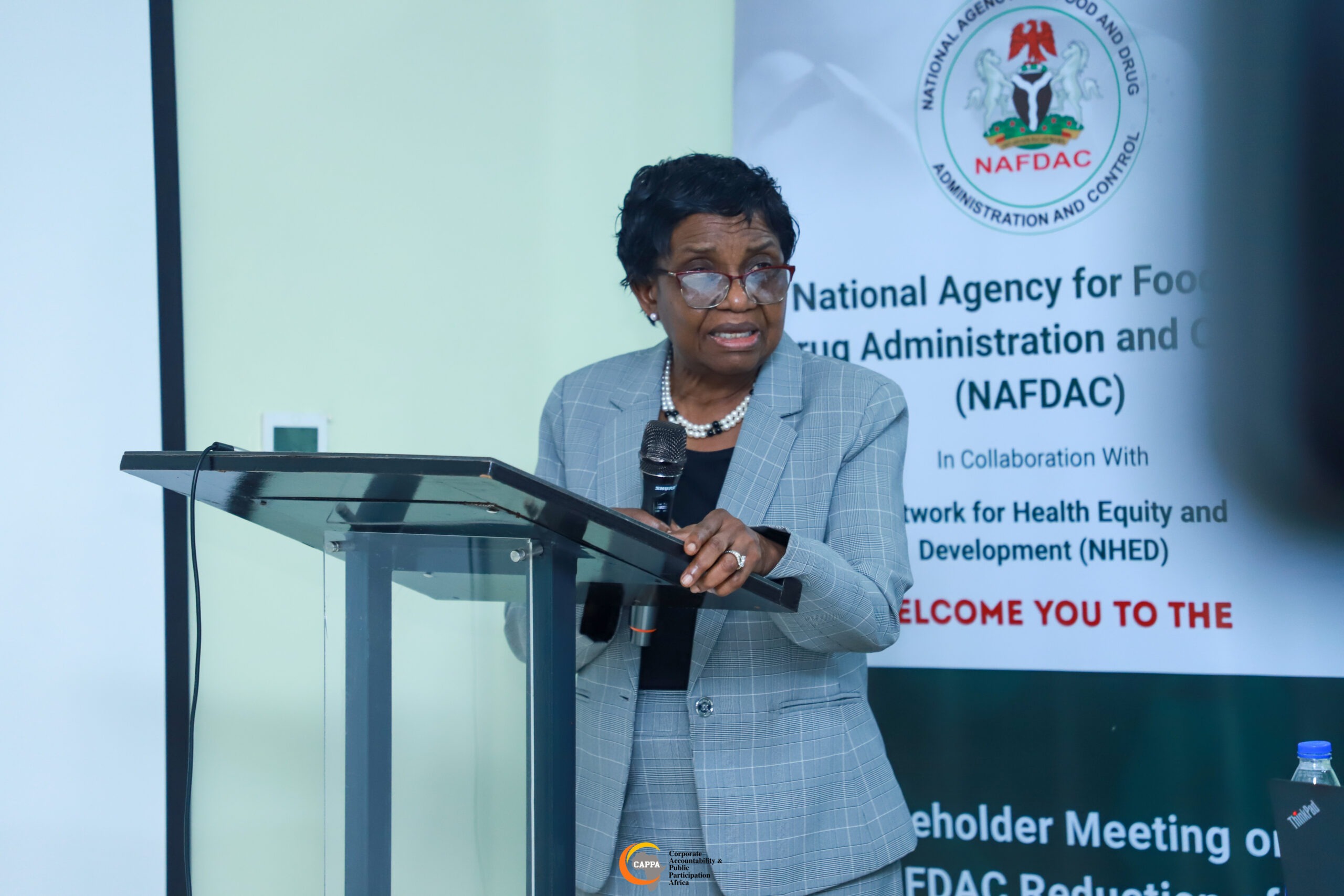
In her opening remarks, NAFDAC Director General, Professor Mojisola Adeyeye, described sodium reduction as one of the most cost-effective public health interventions available today. Citing WHO evidence, she noted that reducing sodium consumption can significantly lower premature deaths and reduce the burden of non-communicable diseases across populations. She explained that the Federal Government, through the FMOHSW and NAFDAC, has already established maximum sodium content levels for several categories of processed and pre-packaged foods and is encouraging manufacturers to reformulate products accordingly. Professor Adeyeye stressed that effective implementation would require collaboration across sectors and strong monitoring and evaluation systems to track compliance and measure impact.

Support for the proposed regulation was evident throughout the meeting. Representatives of the Federal Ministry of Health and Social Welfare, the World Health Organization (WHO), Corporate Accountability and Public Participation Africa (CAPPA), Resolve to Save Lives (RTSL), the Network for Health Equity and Development (NHED), the University of Abuja, and the Global Health Advocacy Incubator (GHAI) all commended NAFDAC’s efforts and pledged continued support for the initiative.
Presenting an overview of the draft regulation, Mrs. Aisha Amusa of NAFDAC’s Regulatory Affairs Committee explained that the framework consists of four key sections covering objectives and application, labelling requirements, offences and penalties, and miscellaneous. According to her, the goal is straightforward. Nigeria’s sodium reduction guidelines must move beyond recommendations and become an enforceable regulatory framework capable of driving meaningful change across the food sector.
Participants also received an update on how comments from earlier consultations had been incorporated into the revised draft. Presenting the review, Dr. Tinuade Akinnubi, Deputy Director, Food Regulatory Directorate and Focal Point for Alcohol at NAFDAC, explained that the regulation was developed using several reference documents, including the 2023 Codex Alimentarius standards, WHO sodium benchmarks, and Nigeria’s National Sodium Reduction Guidelines.
One significant change is the decision to measure sodium content per 100 grams or 100 millilitres rather than by serving size. This approach aligns with international best practice and makes it easier for consumers to compare products across different brands. She also clarified that sodium content will be displayed in nutrition information panels while salt will continue to appear in ingredient lists. Bouillon cubes, a major source of sodium in many Nigerian households, will be classified under seasonings and spices.
The discussion session generated lively debate around implementation, enforcement, labelling, penalties, and consumer awareness. Representatives of the Federal Ministry of Justice raised questions about how sodium reduction efforts would address prepared foods sold by restaurants, caterers, hotels, and other food service providers.
Dr. Omotola Davies, a consultant with the Federal Ministry of Health and Social Welfare, cautioned against sodium-related claims that could create confusion or provide opportunities for misleading marketing by manufacturers. Other participants highlighted the challenge of low literacy levels among consumers and asked whether symbols or visual warnings could be incorporated to help people better understand sodium information on food labels.
Questions were also raised about the informal food sector and how sodium reduction efforts could extend beyond packaged foods to reach bakeries, eateries, restaurants, and other businesses that contribute significantly to daily sodium intake.
Responding to these concerns, Professor Adeyeye highlighted NAFDAC’s ongoing public awareness initiatives, including its NAFDAC and Your Health programme. She noted that once the regulation comes into effect, the agency will intensify public education campaigns and deploy multiple communication strategies to ensure Nigerians understand the importance of reducing sodium consumption. She also revealed that NAFDAC has already engaged various industry associations, including bakers and hoteliers, many of whom have indicated their willingness to support implementation efforts.
As the consultation drew to a close, Dr. Anthonia Dunkwu, Head of NAFDAC’s Regulatory Affairs Commission, expressed satisfaction with the quality of stakeholder participation and noted that the process had largely achieved its objectives. While stakeholders were encouraged to continue submitting comments and recommendations, she indicated that the agency does not currently anticipate the need for another consultation round.
In her closing remarks, Professor Adeyeye assured participants that all comments and feedback would be reviewed carefully and incorporated where necessary. She reiterated NAFDAC’s commitment to protecting public health while encouraging consumers to become more conscious of the foods they eat and the ingredients they consume.